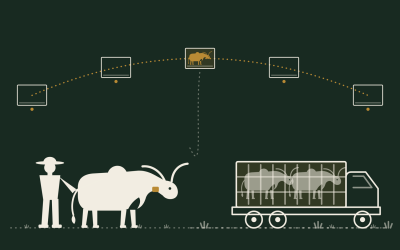

For half a century, the surest line in any Botswana budget speech has been the one about diamonds. The stones built the roads, the schools and the sovereign reserves, and they also built a habit: when revenue wobbled, the fix was to dig more. The late-January 2026 budget breaks that habit on purpose. It is the first national accounting that treats diamond dependence not as a strength to be managed but as a structural risk to be engineered out, with the deliberate pivot toward private-sector and enterprise development sitting at its centre.
That reframing matters more than any single allocation. For an economy where a single commodity has long set the rhythm of fiscal life, the question is no longer whether diversification is desirable — that argument was won years ago — but whether a budget can actually bend the incentives that keep capital, talent and ambition pooled around one industry.
The Diagnosis: Concentration Was Never Stability
The case for change starts with an uncomfortable truth. A diamond-anchored economy looks stable for long stretches and then is not, because its fortunes are decided in markets it does not control — buyer demand, lab-grown competition, global luxury sentiment. Botswana has spent decades doing the prudent thing with that revenue, saving in good years and drawing down in lean ones. But prudence in managing a windfall is not the same as building an economy that no longer needs the windfall.
The 2026/27 budget reads as an admission of exactly that gap. By steering the economy away from diamond dependence and toward enterprise, Finance signals that the state can no longer be both the largest employer and the lender of first resort. The growth has to come from firms — Batswana-owned, regionally ambitious, and operating in sectors that do not sit at the bottom of a single mine.
The takeaway: a resource that funds everything can quietly prevent the country from building anything that lasts beyond it.
The Pivot: From Distributing Rents to Backing Firms
The harder shift is philosophical. A rent-distributing state spreads commodity income through wages, subsidies and procurement. An enterprise-led one spends to make private firms viable — through credit, skills, market access and a regulatory climate that rewards risk rather than punishing it. The deVere Acuma analysis frames the 2026/27 plan as exactly this kind of shift from diamonds to driving enterprise, and the framing is the point: enterprise is treated as the engine, not a side programme.
For an operator in Gaborone or Francistown, the implication is concrete. A budget that prioritises private-sector development is implicitly a budget about the cost of capital, the speed of company registration, the predictability of tax administration through BURS, and whether instruments such as CEDA finance actually reach firms that can scale. The existing machinery — CEDA, the special economic zones under SPEDU and the SEZ Authority, the investment-promotion work of BITC — already exists. What changes is the expectation placed on it: not to cushion the economy, but to grow the part of it the state does not own.
The takeaway: subsidising consumption keeps people afloat; financing enterprise is the only thing that lets them swim.
The Constraint: A Pivot Is Spent, Not Announced
The risk in any diversification budget is that the language outruns the arithmetic. Botswana has announced intent before. The credibility of this version rests on whether the money follows the rhetoric — whether allocations actually move from recurrent spending toward the productive base, and whether the firms meant to absorb that support can convert it into output, jobs and exports rather than dependency of a different kind.
There is also a sequencing problem the budget cannot wish away. Diamonds still pay the bills today; enterprise will pay them, if at all, over a decade. The fiscal tightrope is to protect current obligations — the public wage bill, social spending, debt servicing — while redirecting enough at the margin to seed the new base. Cut too hard and you choke demand; cut too little and the pivot is cosmetic. The specific multi-year spending split that would settle this question is not detailed in the available facts [TK].
The takeaway: a pivot the budget describes but does not fund is just a forecast with better adjectives.
The Regional Read: Botswana Is Not Alone in This
Botswana’s move sits inside a continental pattern. Across resource-rich Africa, governments are discovering that commodity wealth concentrates fragility as readily as it concentrates income, and the better-run economies are the ones treating diversification as industrial strategy rather than slogan. Botswana enters that contest with genuine advantages — low corruption by regional standards, a stable currency anchored by the Bank of Botswana, and a credible institutional record. Within SADC and under AfCFTA, an enterprise base built for export rather than for the domestic market alone is the version that compounds.
That is the deeper meaning of a single national budget. A small, landlocked economy cannot out-mine its larger neighbours, but it can out-organise them — building firms that trade across borders rather than rents that stop at them.
The takeaway: the comparative advantage of the next decade is not what Botswana extracts, but what it manufactures, services and sells beyond its own borders.
What It Means Now
For decision-makers, the 2026/27 budget is best read as a signal about where the state intends to make life easier and harder. Easier, plausibly, for firms that can scale, export and employ; harder, over time, for a model that assumes the next diamond cycle will cover the gap. The honest verdict will not come from the speech but from the implementation — the credit that clears, the zones that fill, the companies that grow. A budget can announce a pivot. Only enterprise can complete one, and that work starts the day after the figures are tabled.