
Economics – Trade & AfCFTA · Editorial
By Moakanyi Magazine · June 2026
A bridge is only as useful as the border policy attached to it. The Kazungula Bridge, linking Botswana and Zambia across the Zambezi, was engineered to speed cargo through one of southern Africa's busiest corridors. The harder bottleneck has always been administrative, not physical. In August 2024, politicians used the bridge as the occasion to call for implementing the SADC Protocol on Free Movement, framing the structure as a reason to finally move on the rules that govern who and what crosses it.
The call is worth taking seriously because it inverts the usual sequence. Most regional integration arguments start with a treaty and wait for the infrastructure to follow. Here the infrastructure already stands, which sharpens the question of why movement through it remains slower than the engineering allows.
The Corridor: Concrete Outpaces Policy
Kazungula sits at a rare meeting point where Botswana, Zambia, Zimbabwe and Namibia converge, and the bridge replaced a slow pontoon crossing that had long throttled regional haulage. The engineering case was always clear. The push to implement the SADC Protocol on Free Movement reflects a recognition that hard infrastructure alone does not deliver the trade volumes it was designed to carry.
The SADC Protocol on Free Movement of Persons sets out a framework for easing how people, and by extension trade, cross member borders. Adoption across the bloc has been uneven, which is why a single bridge can become a focal point for a much larger argument about regional integration. A crossing that clears trucks in hours rather than days changes the unit economics of every load that uses it, and it is at that operational level, not the level of headline tariffs, that integration is won or lost.
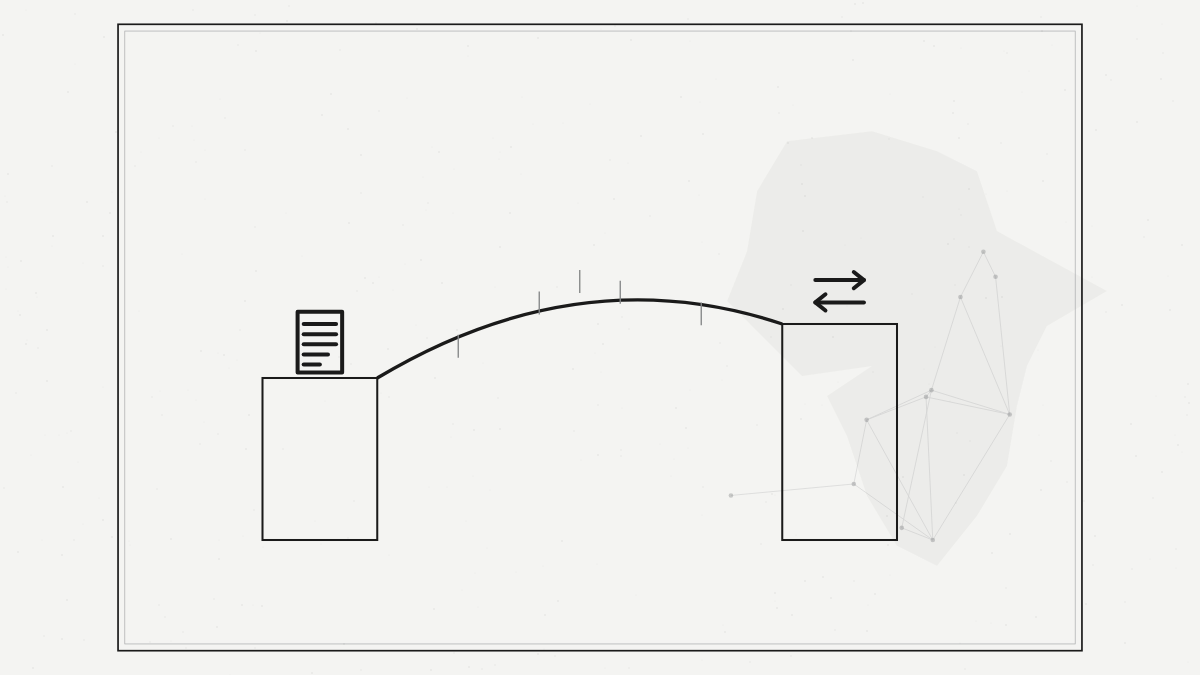
Steel spans the river; paperwork still spans the schedule.
The Stakes: Botswana as a Transit Economy
For a landlocked economy, corridors are not a convenience but a lifeline. Botswana's trade with Zambia and beyond depends on predictable, low-friction crossings, and faster movement at Kazungula would matter for hauliers, traders and the towns along the route. The politicians making the August 2024 call positioned free movement as a way to convert built infrastructure into measurable trade across Botswana, Zambia and the wider region.
For operators, the practical implications are concrete. Border delay is a cost that compounds: idle trucks, demurrage, perishable loads at risk, and working capital tied up in transit rather than turning over. A more open crossing lowers the landed cost of imports moving south and widens the reach of Botswana exporters moving north into the Zambian and Central African markets. It also reshapes where it makes sense to site warehousing, agri-processing and logistics capacity along the corridor.
A landlocked economy lives or dies by the speed of its crossings.
The Caveat: A Protocol Is Not Yet Practice
Free movement also raises questions that member states have weighed carefully, on labour markets, security and the sequencing of who opens to whom. The wider SADC and AfCFTA agenda rests on resolving exactly these tensions. Tariff schedules and trade agreements set the terms, but the lived experience of cross-border commerce is decided at the boom gate, by how long a truck waits and how many documents a trader must produce.
That is why a call is not yet a change. The value of the August 2024 intervention is that it attaches a specific, visible asset to an abstract protocol, giving the integration debate a place to land and a benchmark against which progress can be measured.
Integration is measured at the boom gate, not in the treaty text.
Whether the August 2024 call translates into implementation is the open question. A bridge demonstrates what is possible when capital and engineering align. The protocol behind it will determine whether that possibility becomes routine, and whether Kazungula becomes a model for how the region turns built infrastructure into working trade. For Botswana operators, the upside is not theoretical; it is the difference between a corridor that exists and one that performs.
Sources: allAfrica