
Profiles – Leaders & Changemakers · Editorial
By Moakanyi Magazine · June 2026
A landlocked country's bandwidth is borrowed from its neighbours. Every byte that leaves Botswana crosses a border before it reaches a subsea cable, which makes cross-border connectivity less a feature than a precondition for the digital economy. BoFiNet's March 2026 appointment of Dr Gaone Seleka to lead its next growth phase places a data-network specialist at exactly that pressure point, at a moment when digital infrastructure has moved from a sector ministry's concern to the spine of the diversification agenda.
As the national wholesale network operator, BoFiNet sits beneath the country's internet providers and mobile operators, owning the fibre they resell. Most users have never heard of it, which is the point: it is plumbing, and the quality of the plumbing decides what everyone above it can do. The choice of leader signals how the firm reads its next chapter, not as a utility holding steady, but as infrastructure that has to expand to keep pace with demand.
The Mandate: Fibre as the Next Growth Phase
Framing the appointment around a next growth phase, with an emphasis on digital infrastructure, sets a clear direction. Wholesale fibre is the layer that determines whether retail competition and lower prices are even possible downstream, because you cannot have a thriving internet market on a thin backbone. When wholesale capacity is scarce, retail providers ration and overcharge; when it is abundant, they compete on price and service. A scholar of data networks brought in to drive expansion is a bet that the binding constraint is capacity and reach, not demand.
The detail of the appointment, a leader with a data-network and research background rather than a generalist administrator, reads as deliberate. The next phase of a wholesale network is a technical problem as much as a managerial one: where to lay fibre, how to engineer redundancy, how to price capacity so it reaches beyond Gaborone and Francistown into the smaller centres. Putting that expertise at the top is a statement about what BoFiNet thinks the job actually requires.
The retail internet can only be as good as the wholesale fibre beneath it.
The Geography: Connectivity That Crosses Borders
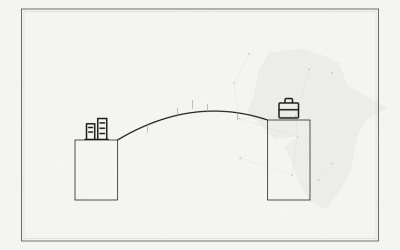
The stated emphasis on cross-border connectivity is the part most specific to Botswana's position. Without a coastline, the country reaches global networks through its neighbours, and resilient, diverse cross-border routes are what protect it from being throttled by a single link or a single transit deal. A landlocked operator that depends on one route is one cable cut away from a national outage; one that builds several is buying insurance as much as bandwidth.
This is also where Botswana's ambitions reach past its own borders. Reliable regional connectivity is the precondition for the country to host data, route traffic for neighbours and participate in the SADC digital market rather than merely consume it. Expansion here is as much regional infrastructure diplomacy as it is engineering, tying Botswana's network into a wider fabric and positioning it, potentially, as a transit point rather than a dead end. That is a more ambitious reading of a wholesale operator's role than the country has traditionally taken.
For a landlocked network, every route to the world runs through a neighbour.
The Stakes: A Backbone for the Whole Economy
What raises the stakes is that fibre is no longer just a telecoms concern; it is the precondition for the rest of the diversification story. A financial-services hub needs low-latency, redundant links to clear and settle. A data-centre play, of the kind several African capitals are now courting, is unviable without abundant, affordable wholesale capacity and resilient cross-border routes to serve a regional market. The decisions a wholesale operator makes about where to build and how to price ripple into sectors that have nothing obviously to do with cables.
For Botswana businesses, the practical reading is that BoFiNet's expansion sets the ceiling on what the digital economy above it can reach. Cheaper, more reliable wholesale capacity shows up downstream as lower retail prices, fewer outages and the confidence to build services that assume the network will be there. A wholesale operator run as a growth business, rather than a static utility, is the difference between connectivity that merely exists and connectivity a company can build a plan on.
Every digital ambition the country holds is rented from the backbone beneath it.
An appointment is a statement of intent, and the delivery still has to follow: fibre laid, routes secured, capacity priced to reach users and businesses beyond the main centres. But the logic of putting a data-network scholar in charge of a wholesale fibre operator at this moment is sound. Botswana's diversification ambitions, from financial services to remote work to digital trade, all run over the backbone BoFiNet is being asked to build out, and the firm has signalled that it intends to treat that backbone as a growth business rather than a static utility.
Sources: Connecting Africa