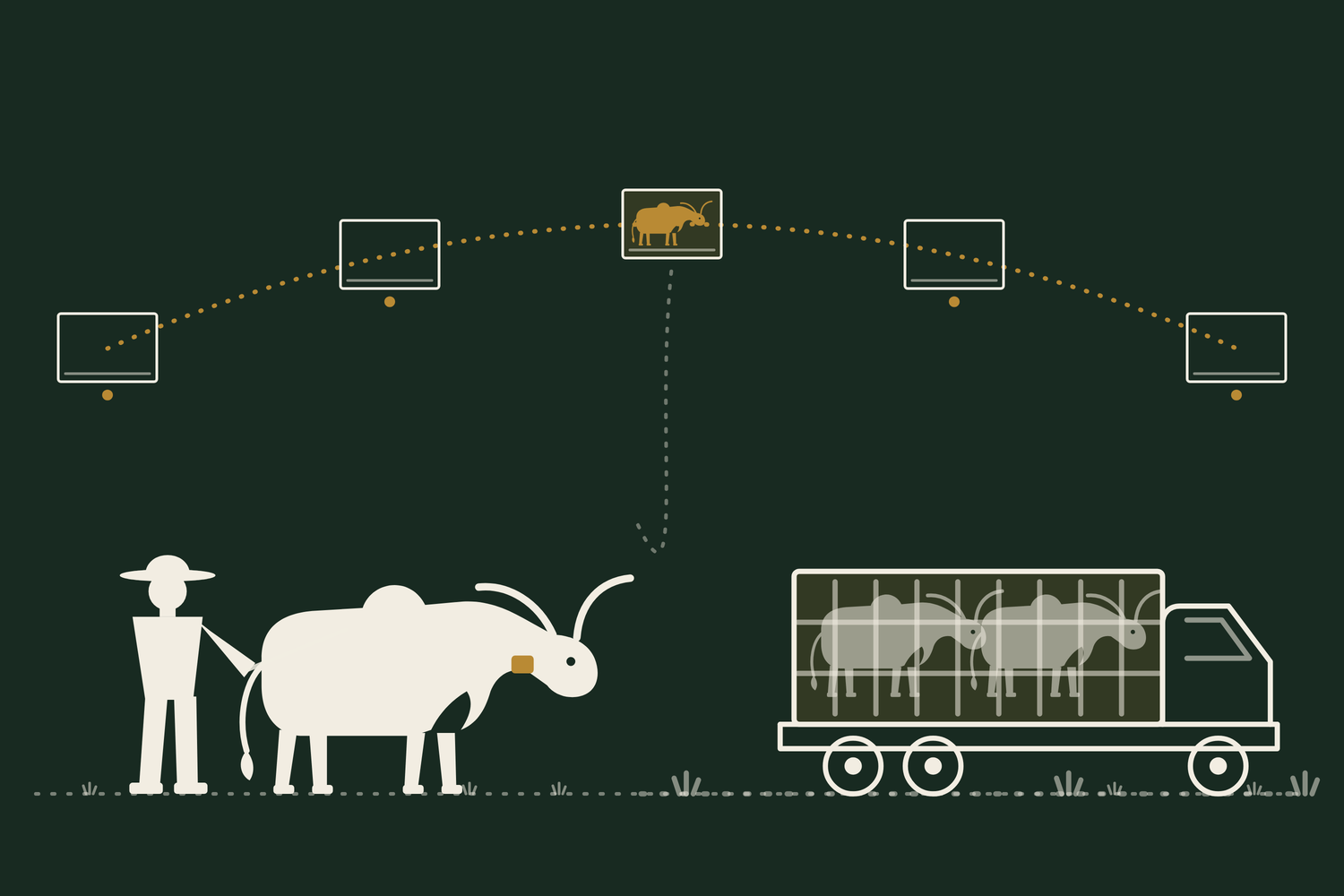

Cabanga Platforms has opened Chinyama.com, a livestock marketplace for the cattle trade of southern Africa. Whoever holds the animals posts what they have and where it is standing. Whoever wants animals posts what they need and in what condition. Both sides sit on one board, arranged district by district, and a person reads both sides and puts the two parties on a call when a fit is confirmed.
The distinction from an auction is deliberate and it is the whole design. There is no bidding, no clock and no algorithm deciding who hears about whom. Chinyama introduces and coordinates. It does not own, buy, sell, move or value livestock, it never handles money, and it takes no commission on a sale. Price, weighing and payment sit between the two parties, as set out in the terms of use.
THE PROBLEM IT ADDRESSES
A holder in a rural district usually has one buyer, whoever drives out that week, and the price is whatever that buyer says, because there is no second bidder within reach. That is not a shortage of demand. It is a shortage of sight. The step-by-step process for the holding side is set out for farmers and holders.
The buying side has the mirror-image problem. An abattoir supplier filling a weekly kill, a feedlot sourcing weaners repeatedly, or a licensed exporter assembling volume against a beef contract has to build that volume out of scattered rural districts one telephone call at a time, and buys from whoever answers rather than whoever fits. What each of those buyers gets is set out for aggregators, feedlots and exporters. Neither side is short of intent. Both are short of sight of each other.
HOW THE PLATFORM IS ORGANISED
– By district, first. Ten districts are open: Central, Ngamiland, Kgatleng, North East and South East in Botswana; Matabeleland South, Midlands and Mashonaland West in Zimbabwe; Limpopo and North West in South Africa. District comes before species or weight because the first question in this trade is where an animal is standing and what it takes to move it. The corridor and the desks behind it are described on the network page.
– By stock. A listing is nine fixed fields, all of them dropdowns: species, breed, number, condition, weight band, district, nearest town, tag status and veterinary status. There is no free-text description, because a paragraph cannot be sorted or matched against a requirement. A listing is started here.
– By requirement. The buying side posts what it takes, in what condition and weight band, from which districts, and whether the need is one-off or ongoing. A requirement marked ongoing stays against those districts rather than expiring, and is posted here.
– By route. Animals cannot cross a district line, let alone a border, without permits and veterinary clearance, and a disease-control zone can close a route overnight. What each route normally requires is set out on the permits and clearances page. Transport is carried as its own side of the board, and transporters list deck type, head count and the routes they already run here.
THE LISTING STANDARD, AND ITS LIMITS
Every valid submission is read by a person within one business day. The holder receives a reference code and a call on WhatsApp, either with a buyer where a fit is confirmed, or with what the listing still needs before a buyer can act on it, which is most often a tag or a clearance. Traceability regimes such as the Botswana tagging system mean an untagged animal is effectively unsellable into the formal chain, whatever it weighs.
Listings carry one of three states and each means exactly what it says. A post not confirmed is the default and is what every new listing carries. A genuine post is one where the person who made it has answered a code sent to their email address, which establishes that the post is theirs. Verified by Chinyama means a person has done checking work on the holder or the herd, which is a paid service described on the service desk page.
What these checks do not establish should be stated plainly. They do not establish the health, condition, weight, age or ownership of any animal, and they are not a warranty of title or of fitness for any purpose. Chinyama does not issue, procure or vouch for any permit, clearance or certificate, and does not act as any party’s agent with any authority. Guidance published on the permits and clearances page is general in nature and is not legal advice; requirements change, and they change fastest during a disease outbreak. Parties are told to confirm with the veterinary authority named for their country before anything moves.
“The animals are there and the buyers are there. What is missing between them is sight of each other, and that is a much smaller problem than it looks.
We have not built anything clever. We have built a board that sorts by district, and put a person behind it who reads both sides before making an introduction. A farmer with eleven head in Ngamiland should be able to reach a second buyer without waiting for one to drive out to him.”
Oscar Manduku-Habeenzu, founder, Cabanga Platforms
WHY CABANGA PLATFORMS IS BUILDING IT
A marketplace fails on its first day for one reason, which is that nobody is on it. Cabanga Platforms is a business media and digital infrastructure company publishing across the same countries the corridor runs through, and its existing audience already contains both sides of this trade: the farmer holding forty head and the exporter filling a contract. Chinyama is one of a family of platforms the company is building on the same pattern, described on the about page.
AVAILABILITY AND COST
– Listing livestock is free, requires no account and no password, and takes about a minute: chinyama.com/list.
– Posting a requirement is free, and a requirement may be marked ongoing: chinyama.com/requirement.
– Listing transport capacity is free and carries no commission on the haul: chinyama.com/transport.
– Verification, sourcing mandates and transport coordination are work a person does, quoted and agreed in writing before it begins. Nothing is collected through the website: chinyama.com/services.
ABOUT CHINYAMA
Chinyama is a livestock marketplace covering Botswana, Zimbabwe and South Africa. It matches holders of cattle with buyers, arranged district by district, and makes introductions on WhatsApp after a person has read both sides. It introduces and coordinates; it does not trade. chinyama.com
ABOUT CABANGA PLATFORMS
Cabanga Platforms is a business media and digital infrastructure company headquartered in Botswana, building platforms that connect counterparties across southern African markets. Chinyama is one of a family of such platforms.
MEDIA CONTACT
Cabanga Platforms, Gaborone, Botswana. Enquiries through chinyama.com/contact or on WhatsApp, Botswana +267 78 467 445 and South Africa +27 69 342 8500.