
By Oscar Habeenzu | for Cabanga Magazine
An economic view of a traveller; a coffee Tourist simplifying black empowerment, with a case study and scenario builds.
Having been involved in the foundations of several black owned banks in several African countries in the last five years, I have come to the conclusion that Africa and Africans need more Black Owned Banks. There can never be a talk about black wealth or black economic freedom without black capital being strong enough to back that freedom.
Let’s take a “short left” to Klerksdorp.
In March 2020, I was privileged to empower twenty-one small businesses in Klerksdorp, North West, a small mixed town – agriculture, mining, and manufacturing. As we went through the week of Digital Marketing training, I realised these twenty-one business owners, including a few family members and friends, each have enough capital to start a Community Bank with 200 members, and R100,000 capital – that is the beginning of a black economy.
Moving on to China.
China is soon becoming the largest economy in the world, as it was in ancient times. Africa was just as strong in those days, with empires running black owned economies as well-oiled machines. What worked, and still works now, is that all things were done by a collection of small economies, the local economy, from village to city to provincial levels, feeding into a larger national economy.
The small and medium enterprises (SMEs) in China have achieved rapid and sustainable growth in the past two decades. Such growth has increasingly contributed to China’s economic development. Whether it be a movie, advert, documentary, or just news, many videos that come out of China are littered with a small business, to the extent that even Chinese Street Food has become a tourism attraction globally. From these small communities, the Chinese people have managed to grow their small local economies, feeding into the national economy, which the whole world now depends on.
In China, micro, small and medium enterprises (SMEs) comprise 97% of all firms, accounting for 80% of urban employment, and for 60% of total GDP in 2013. In 2013, there were about 11.7 million small and micro enterprises and about 44.4 million self-employed entrepreneurs; accounting for 94.2% of all firms. 60.2% of small businesses (excluding self-employed) operate in the services sector (with 36.5% in wholesale, retail and catering; 10.2% in tenancy and business services; 2.5% in information transmission services; 2.5% in real estate industries; and 8.5% in other service industries). In addition, 18.5 of small businesses operate in manufacturing and processing, 5% in construction, and 3.2% in agriculture-related industries.
All this is made possible in China by a working financial industry that caters for the small business, to empower and grow it. In the African economy, there are complexities created by obvious historical reasons, which governments are now putting in place structures that allows the rapid and healthy growth of SMEs as is the above case of China.
In the case of Botswana, there are Cooperative Societies that must register under the Cooperative Societies Act. A Co-operative Society in Botswana, is an autonomous association of persons who voluntarily come together to meet their common economic, social and cultural needs and aspirations through a jointly owned and democratically controlled enterprise. Within the application of such an entity, there is then more detail given on the nature of the society.
Enter the Community Banks in South Africa.
In South Africa, there are two banks that I am participating in their foundations, as a customer and a strategist, and these banks are for different customer profiles – low- and high-end customers. The amazing thing about the South African market is that, even though there are strong banks with great products, there is still ample space for new entrants to niche their way through to profitability within the first trading year, and retain a sizable asset base to do more.
South Africa has defined social structures from an income perspective, and low, middle and upper classes are co-existing, all of which represent niche market space for new banks to serve, preferably community banks. There are however not many community banks, especially black owned banks. With a staggering 45 million plus people being Black South Africans, most living in simple low-income housing, earning minimum wage, and operating small businesses; there is huge scope for black owned community banks.
Let’s look at what the South African Reserve Bank says about Commercial banks and Alternatives.
A Commercial Bank, in South Africa is defined as a public company registered as a bank in terms of the Banks Act and owned by its shareholders who are not necessarily depositors/customers of the bank. Depending on an applicant’s business plan or the activities the applicant wants to undertake, setting up a bank may not be the only, or in some cases, the most appropriate option. There are a number of alternatives to becoming a commercial bank, which allows an applicant to provide some of the services that banks offer at a potentially lower cost than setting up a bank.
Alternatives to consider include a mutual bank, cooperative bank or cooperative financial institution commonly referred to as Community Banks. These are what must be promoted more in small South African black communities.
A Cooperative Bank is defined as an autonomous association of persons united voluntarily to meet their common economic and social needs and aspirations through a jointly owned and democratically controlled enterprise organised and operated on cooperative principles, whose members are employed by a common employer or who are employed within the same business district; or have common membership in an association or organisation, including a religious, social, cooperative, labour or educational group; or reside within the same defined community or geographical area.
A Cooperative Financial Institution (CFI) is defined as a cooperative that takes deposits and usually identifies itself as a Financial Cooperative, Financial Services Cooperative, Credit Union or Savings and Credit Cooperative. A CFI requires a minimum of 200 members, having committed R100, 000 towards shares to be able to register. The process of developing a business plan is important as the business plan will give estimates of the expected levels of income and expenditure for the first three years after registration. Once registered, this community bank then must market itself and develop its community to grow and then become a commercial bank. That journey is the one that most small start-up banks fail to achieve, and it is because they forget their DNA.
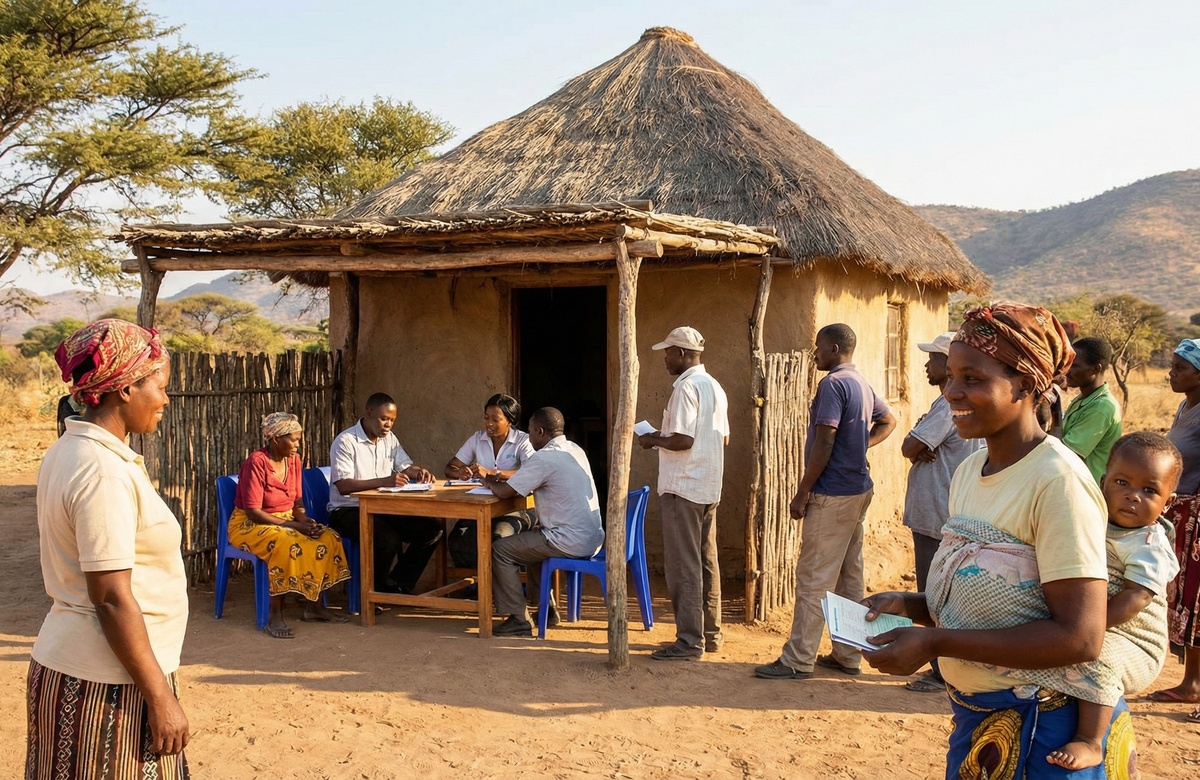
A Community Bank is made up by members of the community, who bring their money to deposit and benefit from financial services. Now, imagine a Community Bank that not only provides banking services, but helps grow the businesses of the 200 start-up members, in order for them to become financially stable and sound that they keep bringing their money to grow that bank.
Co-operatives in general are based and operate on seven co-operate principles that include
Voluntary Membership, Democratically Controlled, Economic Participation, Autonomy and Independence, Co-operation among Co-operators, Continuous member education, and Concern for community.
As is the thrust of Co-operative to have “Continuous member education”, the strength and growth of the community bank is in investing into business and market intelligence for its start-up members. The bank must grow their member’s businesses not just by lending them money, but by growing their operations. Most small businesses do not require capital more than they require knowledge and wisdom of their industries and markets. The community bank that realises this and implements it, will grow faster and easier, and even become more profitable.
Take for example the proposed Midrand Co-op Bank.
The proposed Midrand Co-operative Bank (MCB) is a cooperative financial institution that is owned and controlled by its member. It provides affordable banking services to its members, and through a working group it exchanges information, inform existing and potential members on the activities of the MCB and progress towards registration with the Reserve Bank. The proposed Bank has mandated itself to be owned and controlled by the members, support local businesses and residents, set high rates on savings and low rates on loans, share in the profits generated, and keep the money in the community.
This is a game changer for small businesses in Midrand, Johannesburg, because it helps start-ups belong to a small community and get access to small funds needed to grow their business, and also share ideas on how to run their businesses. It is an affordable bank to associate with as an SME, and creates a good network. Imagine having 200 businesses that are not only your customers, but your business partners, and your suppliers as well. This keeps money circulating within the same community; only if integrity, transparency, and effectiveness are a key denominator for all.
There are many more Start-Up Community Banks in South Africa and across Africa.
From my observation, and having participated in banking consumer surveys in other African markets, one of the major reasons why Black Owned banks, even community, fail is because they do not get much uptake due to Credibility and Product Practicality issues. Many Community Banks owned or founded by black people lack enough credibility to increase their customer recruitments. This can be remedied by the founders being trusted citizens of the community, growing from humble beginning, serving the members faithfully, with carefully structured Risk and Growth strategies in order not to sound like Ponzi Schemes. Many Community Banks lack relevant or practical products to offer their community in order for them to grow their customer’s businesses or lives.
All banking is emotional, and once the new bank founders take time to study the emotional banking profile of their members or prospective members, life for them would become easier. There is need for more Black Owned Banks in South Africa, but the founders must know that the Black South African banking consumer is a very emotional creature that requires convincing – howbeit all African banking consumers require the same.
From a marketing strategy perspective, I highly recommend conducting an Emotional Banking Survey for anyone wanting to start a Community Bank or financial institution in an African economy.
The other markets I am consulting in setting up include, Zimbabwe, Lesotho, and Kenya – where specialized community banks are being started from Farming, Women, to SMEs, and I was privileged to help in their marketing strategy, from foundations up.
Even though economies such as Zimbabwe are stressful for business, there are marginalised communities, whom, if given access to affordable capital, and given platforms to do business, the scope of financial independence for the communities lies within them coming together and growing each other, with the bank being the focal point.
Community Banks are needed in Africa. Community Banks must lead local economic growth. Community Banks must be the business school the business services, and the business network a small business owner needs to grow their business in Africa.
Source: Reserve Bank of SA, OECD, COFISA, Treasury SA
http://www.resbank.co.za/PrudentialAuthority/Deposittakers/Banks/Regulatory%20instruments/Pages/default.aspx
https://www.oecd-ilibrary.org/industry-and-services/financing-smes-and-entrepreneurs-2016/chinapeople-s-republic-of_fin_sme_ent-2016-12-en
https://www.cofisa.co.za/co-operative-banks.html http://www.treasury.gov.za/coopbank/CFI%20start%20up%20guide.pdf