
Money – Banking · Editorial
By Moakanyi Magazine · June 2026
A central bank usually moves first and the banks follow. In Botswana the sequence inverted: commercial prime lending rates rose even though the policy rate had not, tightening credit conditions that the Bank of Botswana had not intended to tighten. The 2026 Monetary Policy Statement sets out the response, and it is unusually direct.
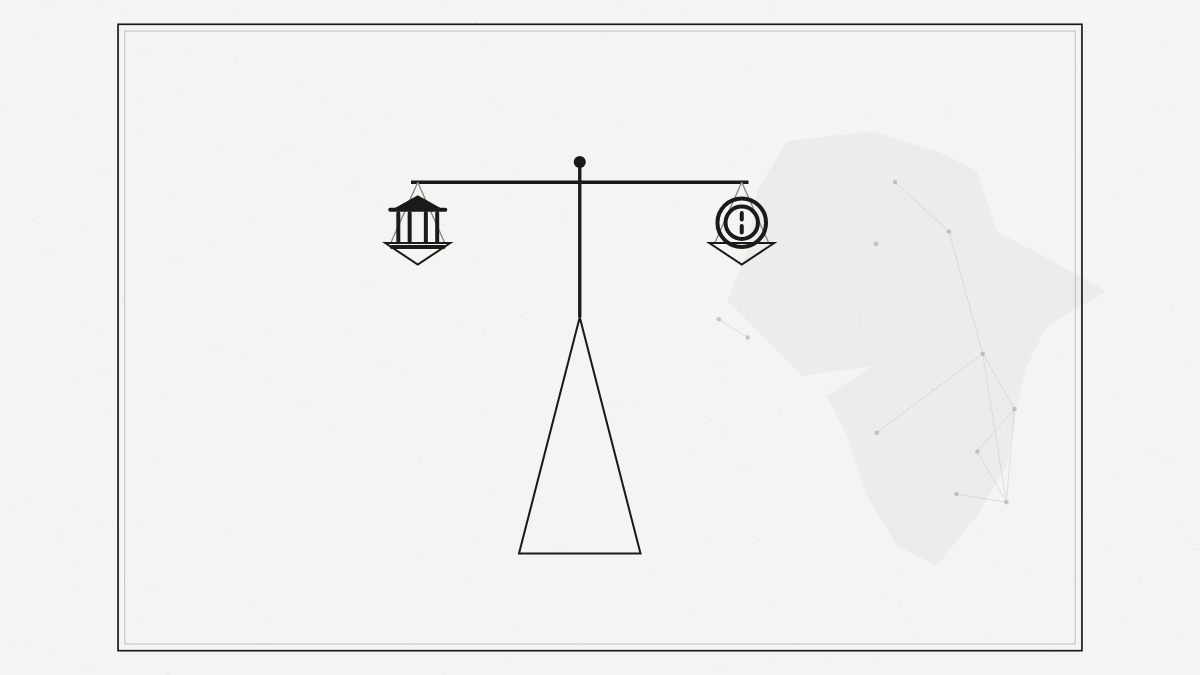
The bank raised its policy rate from 1.9% to 3.5% and, separately, instructed commercial banks not to lift their prime lending rates any further. The first move is conventional. The second is a signal about who sets the price of credit in practice – and a reminder that a policy rate only matters if it actually reaches the borrower.
The Inversion: When the Market Tightens Without the Bank
Prime lending rates (PLRs) are the reference banks use to price loans to their best customers; most retail and business lending is quoted as a margin above them. When PLRs drift upward independently of the policy rate, the cost of borrowing rises across the economy without any deliberate decision by the monetary authority. That gap between intended and actual conditions is what the statement targets. A policy rate is only the start of the chain; the PLR is the link that the household and the firm actually feel.
For a borrower in Gaborone or Francistown, the distinction is not academic. A higher PLR raises the instalment on a mortgage, a vehicle loan, or a working-capital facility regardless of what the headline policy rate is said to be. When banks lift PLRs on their own, the economy tightens by stealth – dearer credit, slower investment, thinner margins – while the official stance reads as unchanged. The danger for a central bank is that its published rate stops describing the conditions on the ground.
When the market sets a tighter price than the bank intends, the bank has to choose between its rate and its authority.
The Instruction: Holding the Line on PLRs
By directing banks not to raise PLRs further, the Bank of Botswana is asserting that transmission – the link between its policy rate and what households and firms actually pay – runs through it, not around it. The lift from 1.9% to 3.5% gives the policy rate room to do the work the bank wants done, while the instruction caps the channel banks had used to tighten on their own. The two moves are not contradictory; they are a single corrective applied at both ends of the same chain.
It is a corrective rather than a stimulus. The combination is meant to realign commercial pricing with the bank's stance, not to loosen credit outright. The arithmetic is straightforward: a higher policy rate would, in normal circumstances, justify dearer lending, but the bank has decided that the PLR drift had already done more than the policy stance warranted. Capping the PLR while raising the policy rate is a way of saying the existing cost of credit is roughly where it should be, and the banks had simply got there by the wrong route.
A rate rise paired with a cap is less a tightening than a reassertion of control.
The Stakes: Transmission as a Test of Credibility
A monetary authority lives on the assumption that its decisions reach the real economy. If commercial banks can move the effective cost of credit independently, the policy rate becomes a signal rather than an instrument, and the bank loses the lever it is meant to hold. The 2026 statement reads as the Bank of Botswana refusing to let that happen – choosing to manage the price of credit directly when the usual channel misbehaved.
For operators reading the cost of capital into their 2026 plans, the practical message is that the policy rate is again the number that matters, and that the bank intends to keep it that way. A firm weighing an expansion in Selebi-Phikwe or a borrower refinancing in Lobatse can plan against the published stance rather than guessing where banks might price next. Predictability is itself a form of easing, even when the headline rate has risen.
Credible transmission is worth more to a borrower than a low rate that does not hold.
The Bank of Botswana has, for now, closed the gap between what it sets and what the banks charge – and made clear it expects that gap to stay closed. The policy rate moved from 1.9% to 3.5%, but the more consequential change is the principle behind the instruction: in Botswana, the price of credit is set by the central bank, and the banks are expected to follow rather than lead.
Sources: Bank of Botswana