Economics – Global & Regional · Editorial
By Moakanyi Magazine · Global Issue · June 2026
A mining economy can postpone diversification right up until the moment it cannot. Budget and rating commentary around Botswana's plan kept circling the same point – the need for non-mining growth – and the repetition is the message. The country has talked about diversifying for a generation; the urgency now is that the diamond cushion is thinner than it used to be, and the talk has to become capacity.
Non-mining growth is not a slogan but an arithmetic necessity. When diamond receipts soften, every Pula of revenue from beef, tourism, services or manufacturing is a Pula the fiscus does not have to borrow. The case for diversification has shifted from aspiration to balance-sheet defence, and the budget arithmetic now makes that case more loudly than any policy paper.
Why the commentary keeps repeating itself
The budget projected a rebound this year, but rating and budget commentary paired that forecast with a familiar warning: the rebound is fragile without growth outside mining. A recovery led by a single volatile commodity is a recovery that can reverse with the next price move, which is why the warning attaches itself to every optimistic forecast.
That is why the point is repeated rather than resolved. Diversification is slow, politically demanding and capital-intensive, while diamond revenue is fast and familiar. The commentary keeps returning because the structure has not yet changed, and the structure does not change by being described – it changes by being built.
A warning repeated for a generation is a structure that has not moved.
Where non-mining growth can actually come from
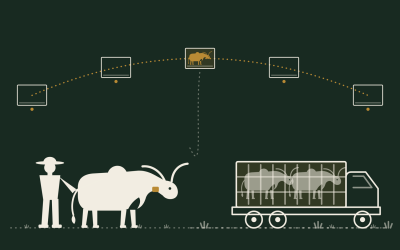
Botswana's non-mining options are not abstract. Beef through the BMC and the EU market, tourism through Maun, Kasane and the delta, and services and light manufacturing supported by CEDA and BITC are the concrete sectors that can carry revenue when diamonds soften. The question is execution, not identification – the sectors have been named in every plan for two decades.
Each of these has a ceiling set by infrastructure, skills and market access rather than ambition. Closing the gap means treating tourism arrivals, beef quotas and investment promotion as fiscal priorities, not side projects – because in a thin-diamond year they are not the diversification story, they are the budget. The constraint is delivery, and delivery is a choice about where the state puts its attention.
The sectors are known; only the seriousness is in question.
The cost of waiting one more cycle
The temptation is always to let the next diamond upswing pay for the diversification, postponing the hard work to a richer year. The flaw in that plan is that the rich years remove the urgency and the poor years remove the means, so the work never starts. The repetition in the commentary is the sound of that postponement playing out over a generation.
Breaking the pattern means doing the unglamorous building during the soft cycle, when the case is clearest, even though the money is tightest. That is the harder path, but it is the only one that turns a projected rebound into a durable one rather than a pause before the next dependence-driven dip.
The diversification deferred to a richer year is the diversification never done.
What credible non-mining growth would look like
It helps to be specific about what success would mean, because vague diversification is how a generation of plans dissolved. Credible non-mining growth shows up as measurable things: more beef cleared through the BMC into the EU market, more tourists routed through Maun and Kasane and spending longer in the country, more firms supported by CEDA reaching export markets, and more investment landed by BITC outside the mining sector. These are countable, and what is countable can be held to account.
The discipline the commentary implies is to set those targets and report against them with the same seriousness applied to diamond receipts. A rebound built on non-mining sectors is durable in a way that a diamond-led one is not, because it does not reverse the moment the stone softens. The structural fix is not a single project but a steady rebalancing of where the country's revenue comes from.
Diversification you can count is diversification you can defend.
The so-what for Botswana is that non-mining growth has stopped being a long-term aspiration and become a near-term defence. The rebound the budget projects holds only if the economy outside the mines grows fast enough to catch the next diamond dip – and that work has to start in this cycle, not the next one, because the commentary will keep repeating until the structure finally answers it with revenue that does not swing with one stone.
Sources: Reuters