
Property – Real Estate & Development · Editorial
By Moakanyi Magazine · China-in-Africa · June 2026
The promise is specific: at least 50,000 families in regions with no main-grid access, powered by solar. The funding behind it is equally specific – 100 million yuan, about US$14 million. The gap it addresses is not. More than 600 million Africans lack electricity, by the International Energy Agency's reckoning cited in the FOCAC materials. The Africa Solar Belt's off-grid component is a sharp instrument aimed at a continental-scale problem, and the honest way to assess it is to keep both numbers in view at once.
The off-grid pledge: small fund, defined target
Launched in September 2023 at the African Climate Summit, the programme commits 100 million yuan (about US$14 million) to solar projects in underserved areas, with the stated aim of reaching at least 50,000 families outside the reach of national grids. The clarity of the target is a virtue – it can be checked. It is also a reminder of proportion: 50,000 households is a village-and-town scale of ambition, not a national one.
The arithmetic is worth doing. US$14 million across 50,000 families is roughly US$280 a household – enough for the kind of small solar system that powers lighting, charging and a radio, not industrial or productive load. That is a real improvement in daily life for the families reached, and a modest one in energy terms. Naming the figure plainly avoids the trap the brief warns against: reading a grant-funded pilot as if it were a transformation.
A named target of 50,000 families is honest precisely because it can be verified later.
The figure also has to be set against the trajectory of Chinese renewable finance, which Carbon Brief records as rebounding after a two-year lull. A grant-funded off-grid pilot and a rebound in large-scale renewable lending are different instruments serving different ends, and conflating them flatters the smaller one. The 50,000-family programme is a humanitarian-scale intervention; the lending rebound is a commercial-scale one. Reading the two together, without merging them, is how a continental audience keeps the proportions straight.
What grid-scale already looks like: Garissa
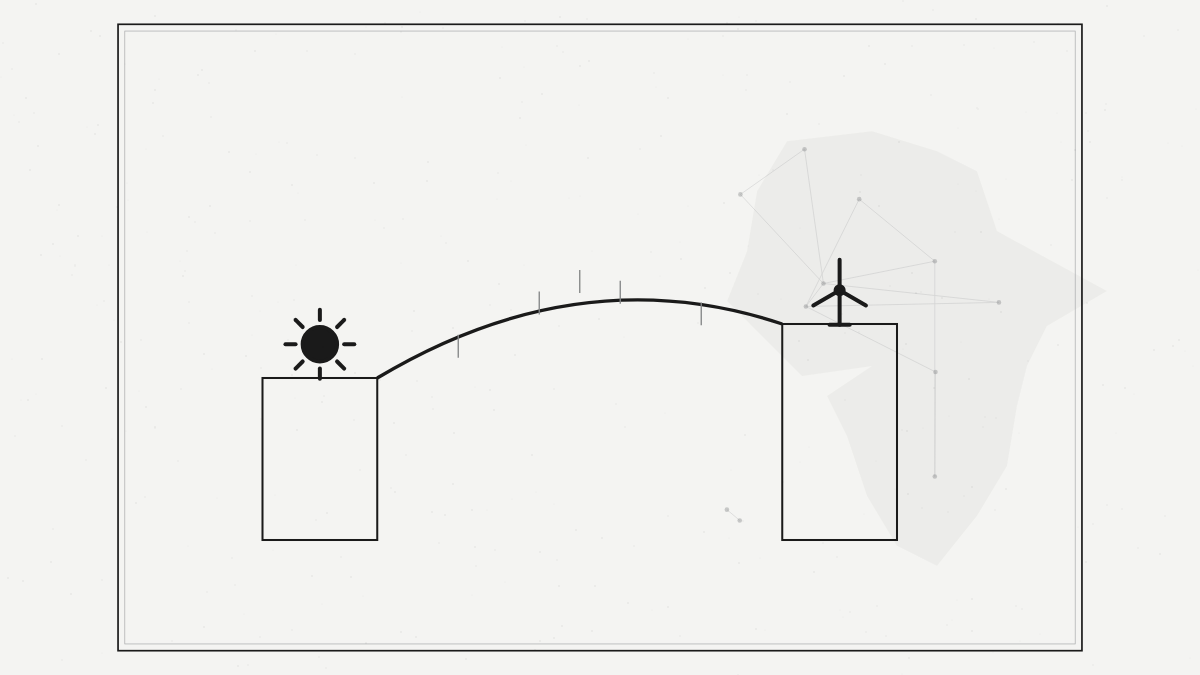
Off-grid kits sit alongside larger Chinese-financed assets. Kenya's Garissa Solar Power Plant, built and financed by Chinese firms, runs at 55 megawatts and generates over 76 million kilowatt-hours a year, cutting an estimated 64,000 tonnes of CO2 annually – described in the source as the largest grid-connected solar facility in East and Central Africa. Across the continent, China-Africa photovoltaic cooperation is reported at over 1.5 gigawatts of installed capacity through more than 100 joint projects, with the De Aar Wind Farm in South Africa among the named schemes.
The contrast between Garissa and the off-grid fund is instructive. Grid-scale plants are financed, not granted, and they carry the debt and tariff questions that have shadowed Chinese infrastructure lending across Africa for two decades. The off-grid programme, funded by a 100-million-yuan grant, sidesteps that debate but cannot reach scale. A continent that needs both has to weigh which instrument carries which obligations – a grant burdens no treasury, a loan-financed power plant does – and the published record describes the assets more fully than it describes the terms behind them.
Grid-scale plants like Garissa do the heavy lifting; the off-grid fund reaches where the grid does not.
The underserved-regions logic: reaching the last mile
The cooperation's distinctive claim is that it targets the hardest places to serve – communities the main grid may never economically reach. That is where small solar systems genuinely change daily life, and where the 50,000-family figure, if delivered, would be a real gain. The caution is to read it as last-mile relief rather than transformation: US$14 million addresses a sliver of a 600-million-person shortfall.
There is a development logic to concentrating grant money where the market will not follow. Private capital and national utilities chase density and ability to pay; the deepest gaps sit where neither is present. Aiming a small fund precisely at those communities is defensible targeting, not a weakness – provided the claim is read for what it is. The risk is rhetorical inflation, where a last-mile pilot is folded into a continental access narrative it cannot support on its own, and the official framing does lean that way.
Last-mile solar is the right tool for the unreachable, but its scale must be named plainly.
For property and development planners across underserved regions, the off-grid programme is best treated as a verifiable pilot rather than a solved problem. The figures are concrete enough to track family by family. The continental meaning depends entirely on whether 50,000 families becomes a template that others – African states, multilaterals, private capital – choose to multiply, and on whether the next tranche carries grant terms or loan terms. The source names the target; it does not name the sequel, and that sequel is where the access story will actually be decided.
Sources: FOCAC Summit, Carbon Brief