
Agriculture is regarded as one of the major pillars of Zimbabwe’s economic growth as supported by the Country’s Indigenization and empowerment programs in the form of Land reform and Command farming initiatives. The introduction of Command Farming has brought many players in the farming arena; therefore Agricultural Finance institutions must play a pivotal role in spearheading the success of all farmers in different spheres.
Agricultural financing refers to financial services ranging from short, medium and long term loan facilities to crop and livestock farming activities and also insurance covering the entire agricultural value chain, input supply, production, distribution, whole selling, processing and marketing. However, the question still remains whether the Agrifinancing services offered by the Banks and various microfinance institutions are equipped enough to finance the farming community.
A snap Survey carried out so far with the farming community came up with the following findings:-
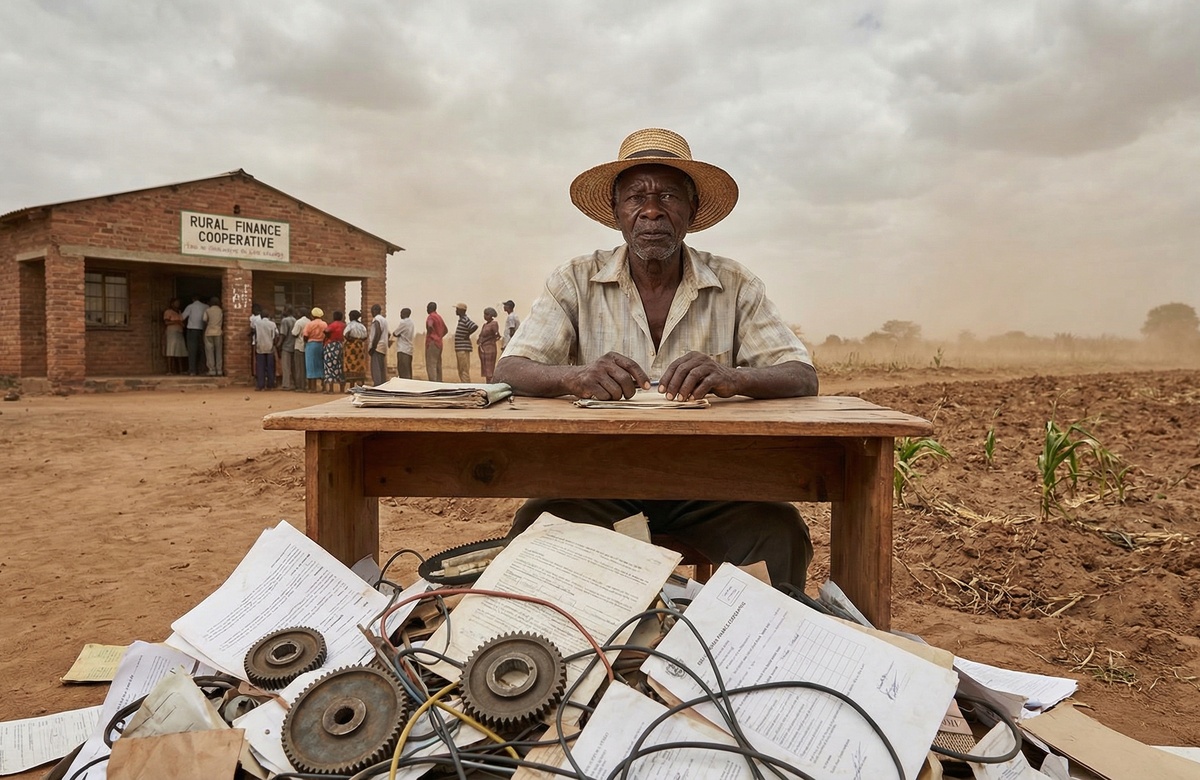
The Agrifinancing loan facilities offered by Banks and Micro-finance institutions tend to favour a group of well established farmers in the category of large and medium scale farmers sidelining small scale resettled farmers and rural farming community who do not meet the collateral and guarantees requirement.
Most of the Small Scale and Rural farmers do not have Bank accounts and this make it difficult for them to access loans from banks since it is a requirement for one to have an Account with the Bank he or she intends to apply for a loan.
Terms and conditions of payment plan for the loan is beyond reach of these farmers as most of them are still trying to make ends meet.
There is lack of knowledge amongst some of the farmers on how, when and where to apply for these loans.
Most of the Banks which offers loan facilities are located in major towns making it difficult for remote farming communities to access their services..
In order to increase production in the Agriculture industry there is need to revisit the Bank loan facility requirements so that it becomes user friendly to all farmers. The Agrifinancing institutions should come up with modalities to capacitate the small to rural community farmers who forms the backbone of grassroots farming and contributes immensely to the country’s Gross Domestic Product (GDP). Agricultural loan facility becomes more important, particularly when the agricultural development process is shifting to modern methods and packages of practice.
For years there has been much talk about the need for formal financial service providers to engage in the agriculture sector. It is known that small scale farmers and small to medium enterprises (SMEs) are often excluded from financial services offered by banks, microfinance institutions, credit unions, and other regulated financial service providers. According to Dahlberg estimates, less than 2% of the demand for global financing by smallholder farmers is met by financial institutions.
There are a number of risks that are specific to agriculture, including natural disasters, price volatility, pests and disease, which are difficult to mitigate and insure against. In addition, the lack of coordination within value chains, and the bulky, seasonal and long-term financing requirements for food products pose serious challenges. Adding to these challenges is the general lack of capacity within financial institutions to properly assess returns on investment in agricultural activities.
The growing global demand for food is providing more opportunities for investments. This demand is expected to keep growing due to population growth, longer life expectancy, growing urbanization rates, and changing diets made possible by rising income. Global agricultural production is also increasing to meet this demand.
It is against this background that the following are recommendations as highlighted by various farmers across the farming community.
The Agrifinancing loan facility should go beyond the newly resettled farmers and reach the rural peasant farming community who are still to add value to their farming activities.
Banks should give provisions for .providing an agribusiness insurance facility in conjunction with the loan facility.
The process of loan application should be flexible and user friendly to all farmers from different background and Agrifinancing institutions should prioritize the ease of doing business with farming community.
There is need for decentralization of bank loan facilities to remote farming areas.
Banks should carry out outreach programmes before, during and after the farming season in order to educate farmers on the benefits of agribusiness financing.
Bank should work with Ministry of Agriculture and Rural Resettlement so as to get information on areas of concern with capable and potential farmers who lack funding.
The Ministry of Finance through the Reserve Bank of Zimbabwe should capacitate local banks that are financing agribusiness.
Finance Institutions should also have long term payment plans especially for new farmers who are still struggling to boost their productivity.
Lack of finance capital for many has meant they have not got off the ground and some have significant areas of under-utilized land, with infrastructure in disrepair. Despite the woeful lack of support, the smallholders have done reasonably well. Most are producing surplus and reinvesting in their farms. Around two thirds have produced more food than just for subsistence in nearly all years that we’ve conducted the research. In Mvurwi, tobacco dominates, and the smallholder-led tobacco boom has brought significant investment, both on and off-farm. For their part larger landholdings have struggled. The exceptions are those operating under contract arrangements with estates. These farmers have done relatively well because they’ve been supported and finance has been guaranteed. New contracting and joint venture arrangements are emerging in some areas, but much more needs to be done.
In recent years, an increasing yet still small number of financial institutions have pioneered innovative experiences related to the delivery of a wide range of agricultural financial products and other investment vehicles, which tend to be more inclusive of poorer rural families that depend on agriculture.
The main suppliers of the institutional agro-finance are commercial banks which include Agribank the main developmental bank with the main objective of bringing about at national level all-round development in the agricultural sector. Other Commercial Banks including POSB, ZB BANK, CBZ and Zimbabwe Women’s Microfinance Bank amongst a number of local banks nationwide are also a major source of Agribusiness loans. However 90% of the local banks are not fully equipped in terms of reaching out to all farmers as most of their websites have shallow or no information on how to access agribusiness loans. This hinders basic information access and there is need for refurbishment or updating of the e-banking technology for easy application and accessing of the funds regardless of location.
Government loans for agriculture are currently offered through the “command agriculture” programme. Focusing on larger farms with irrigation infrastructure, it has shown some success in the past season.
Partnerships and joint ventures will be significant for some larger farms and certain crops, where external finance and expertise are essential. Already Chinese involvement in tobacco production is proving to be important.