
Property – Infrastructure & Megaprojects · Editorial
By Moakanyi Magazine · June 2026
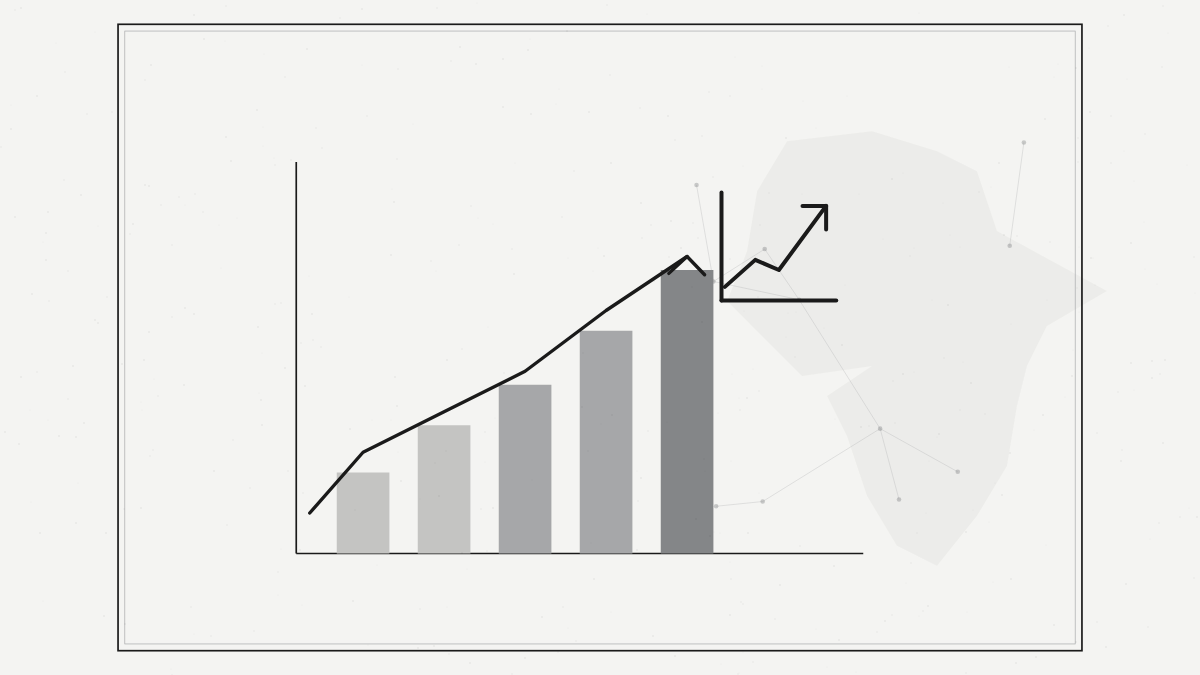
A diamond-dependent economy cannot pave its way to diversification overnight, but it can decide where the next decade of public spending lands. In its February 2024 budget, the government projected 4.2% growth and committed P8.69 billion in deficit financing directed at roads, airports and water projects.
The framing matters as much as the figure. After a pandemic that exposed how exposed Botswana remains to a single export, the choice to borrow specifically for hard infrastructure signals a wager that capacity built now pays back as private activity later. A budget can fund a road; it cannot, on its own, fund the demand that makes the road worth building. That second part is the test the 4.2% projection quietly sets.
The Wager: Deficit Spending as a Growth Lever
Deficit financing of P8.69 billion is not a small commitment for an economy Botswana's size, and the budget tied it to a specific 4.2% growth projection rather than a vague recovery hope. The logic is conventional public economics: roads, airports and water systems are the preconditions other sectors build on, so the state spends ahead of demand to lower the cost of everything that follows. When private investors weigh a factory in Selebi-Phikwe or a lodge expansion in Maun, the quality of the road, the reliability of water and the reach of the nearest airport all sit inside their sums.
The risk is equally conventional. Borrowed money delivers growth only if the projects are completed on schedule and used at scale, and infrastructure pipelines across the region have a long record of slipping on both counts. Deficit financing also carries a standing cost: the debt is serviced whether or not the growth arrives, so a project that stalls turns from an asset into a liability on the public accounts. For operators, that is the difference between a budget line and a working road.
Borrowing for roads is a bet that capacity built today becomes private activity tomorrow.
Roads, Airports, Water: Where the Pula Lands
The three named categories each carry a distinct diversification logic. Roads knit the domestic market and ease the freight cost that sits behind every Botswana export, a cost that weighs especially hard on a landlocked country shipping through neighbours' ports. Airports matter for a tourism economy anchored in Maun, Kasane and the Okavango, where access is effectively the product and a constrained runway is a constrained season. Water is the binding constraint on agriculture, manufacturing and settlement across a largely arid country, and the project that secures it unlocks activity far beyond the pipe.
Read together, the allocation is less a stimulus scattergun than a statement about which bottlenecks the government judges most binding for the post-pandemic recovery. The implication for operators is that the budget is signalling where future capacity will sit. A firm planning around a corridor the state is about to upgrade is planning with the grain; one that ignores the pipeline risks building demand the infrastructure will not yet carry.
Roads, airports and water are not three projects but three constraints the budget chose to loosen.
The Catch: Forecast Versus Delivery
The 4.2% projection is a forecast, not a result, and it rests on execution the budget can fund but not guarantee. The gap between an announced capital programme and a completed one is where most of the risk lives, and it is rarely visible in the headline figure. Procurement delays, contractor capacity and the simple difficulty of building at scale in remote areas all sit between the P8.69 billion and the growth it is meant to produce.
There is also a sequencing point worth holding onto. Infrastructure repays slowly, in second-round effects rather than first-year output: the road lowers freight costs, the cheaper freight makes a venture viable, the venture hires, and only then does the spending show up as broad-based growth. A single budget year cannot capture that chain, which is why the 4.2% projection is best read as a down payment on a longer return rather than a same-year promise. Judging the programme on twelve months would measure the spending before the payoff has had time to arrive.
For decision-makers, the signal worth tracking is therefore not the headline number but the pace at which the money actually converts into completed roads, working airports and delivered water, because that conversion is where a budget line becomes growth. A diversification strategy financed by debt only works if the assets it builds come on stream and earn their keep, and that is a verdict the next several budgets will deliver, not this one.
Sources: Reuters