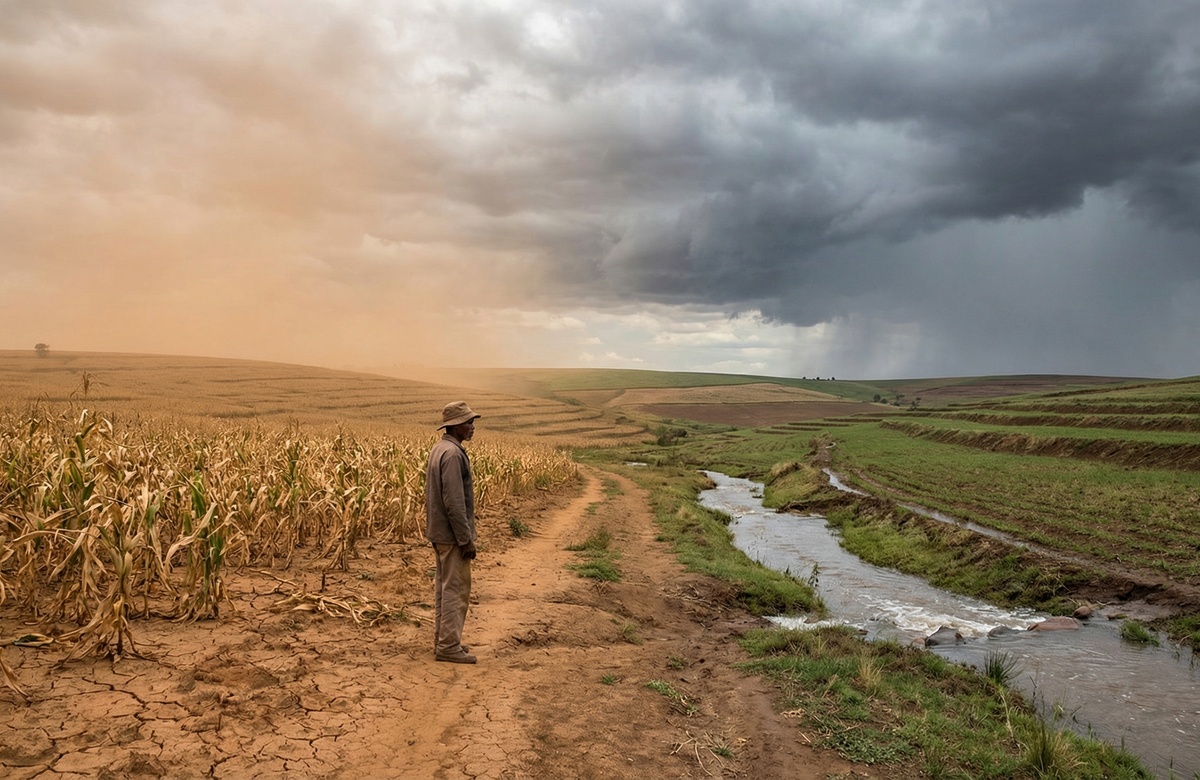

Southern Africa’s agriculture sector, a lifeline for millions, is increasingly threatened by the effects of climate change. Rising temperatures, unpredictable rainfall patterns, and extreme weather events are altering the region’s farming landscape, challenging food security and livelihoods. Addressing these challenges requires innovative solutions, sustainable practices, and coordinated efforts across the region.
Changing Weather Patterns and Their Effects
Climate change has disrupted traditional weather patterns in Southern Africa, making farming more unpredictable and less productive. Prolonged droughts, such as those experienced in Botswana and Namibia, reduce water availability for irrigation and livestock, leading to crop failures and food shortages. Conversely, intense floods damage crops, erode soil, and displace farming communities.
The shift in seasons further complicates planting and harvesting schedules. Farmers who rely on traditional knowledge find it increasingly difficult to predict optimal times for agricultural activities, resulting in reduced yields.
Declining Soil Fertility and Desertification
Rising temperatures and erratic rainfall accelerate soil degradation, reducing fertility and productivity. In arid regions, such as the Kalahari Desert, overgrazing and deforestation exacerbate desertification, rendering large areas unsuitable for farming.
Soil erosion, driven by intense storms and improper farming practices, depletes nutrients necessary for crop growth. Without intervention, these trends could significantly diminish the arable land available for agriculture in Southern Africa.
Threats to Livestock and Biodiversity
Climate change also affects livestock farming, a critical component of Southern Africa’s agricultural economy. Heat stress, reduced water availability, and declining pasture quality compromise animal health and productivity. Diseases such as Rift Valley Fever are becoming more prevalent as changing climates create favorable conditions for disease-carrying vectors.
Biodiversity loss is another significant concern. The disappearance of native plant species due to changing ecosystems affects both wild and domesticated animals that rely on them for sustenance. This disruption threatens the delicate balance of agricultural ecosystems.
Adapting Through Climate-Resilient Practices
Farmers across Southern Africa are adopting climate-resilient practices to mitigate these impacts. Techniques like conservation agriculture, which emphasizes minimal soil disturbance, crop rotation, and organic soil improvement, help maintain soil health and boost productivity.
Drought-resistant crops, such as sorghum, millet, and cowpeas, offer reliable yields in challenging conditions. Integrating agroforestry, which combines trees with crops and livestock, enhances biodiversity, improves soil fertility, and provides additional income sources.
Leveraging Technology for Climate Adaptation
Technology plays a vital role in helping farmers adapt to climate change. Mobile apps and weather forecasting tools provide real-time information, enabling farmers to plan planting and irrigation schedules more effectively. Remote sensing technologies monitor crop health and water usage, helping farmers optimize resources.
In Botswana and Namibia, solar-powered irrigation systems reduce reliance on traditional energy sources, promoting sustainability. These innovations empower farmers to remain resilient in the face of climate change.
Collaborative Efforts for Sustainable Agriculture
Addressing the impacts of climate change requires coordinated efforts among governments, private sectors, and international organizations. Policies that promote sustainable farming, provide financial support, and invest in research are essential for building a climate-resilient agricultural sector.
Programs like the Southern African Development Community’s (SADC) Regional Agricultural Policy focus on fostering collaboration and sharing best practices across member states. These initiatives aim to strengthen food security and enhance the adaptive capacity of farmers in the region.
A Call for Urgent Action
Climate change poses a significant threat to Southern Africa’s agriculture, but it also presents an opportunity to innovate and transform the sector. By adopting sustainable practices, leveraging technology, and fostering collaboration, the region can build a resilient agricultural future. Ensuring food security and protecting livelihoods will require proactive efforts from all stakeholders to mitigate the impacts of a changing climate.
Sources:
Climate Change Impacts on Agricultural Trade and Food Security: https://ccafs.cgiar.org/research-highlight/climate-change-impacts-agricultural-trade-and-food-security
Climate Change Impacts on Water and Agriculture: https://www.sciencedirect.com/science/article/pii/S0305750X1500234X
Sustainable Agriculture in Arid Zones: https://www.ifad.org/documents/38714170/40180026/arid-zones-sustainable-agriculture