
Economics – Trade & AfCFTA · Editorial
By Moakanyi Magazine · Global Issue · June 2026
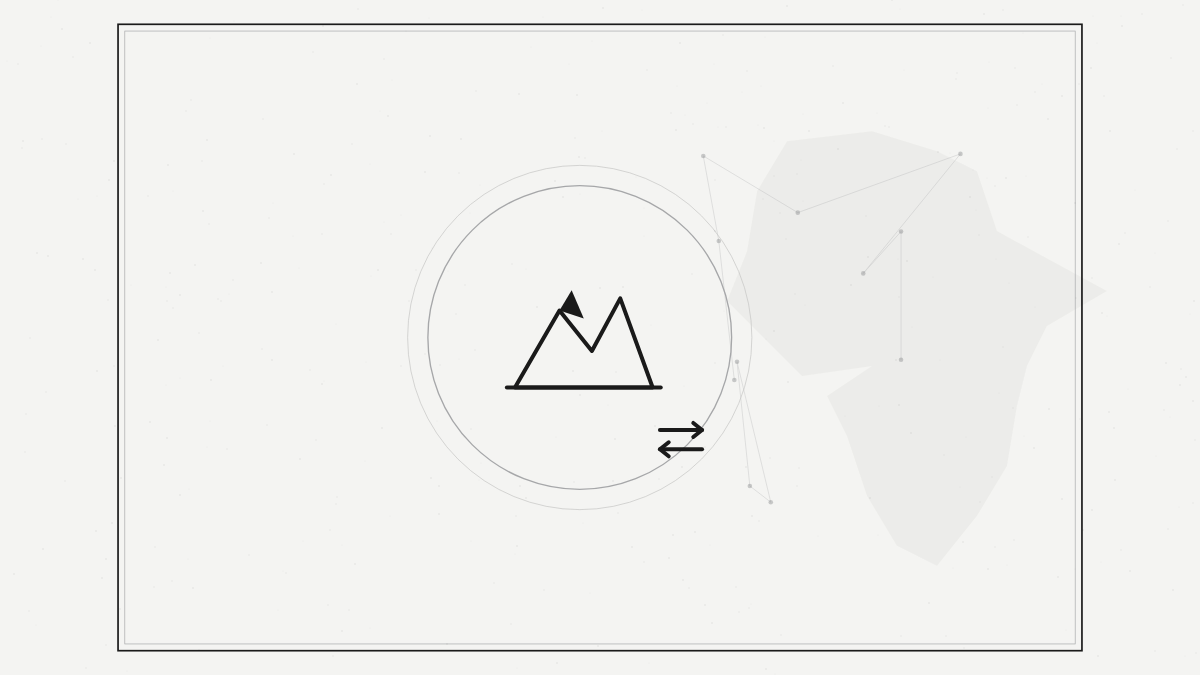
For a country whose name is bound up with a single stone, the most striking fact about Botswana's geology is how little of it has actually been looked at. The mines minister has announced a push to explore the large portion of national territory still classed as under-explored. The signal is not that diamonds are finished, but that the map has blank spaces, and the state now intends to fill them.
That ambition arrives at a useful moment. Debswana's output and the rough-diamond market have both been soft, and a single-commodity economy feels every swing in one price. Widening the search is the rational hedge for Gaborone, and the institutions built around the resource economy, from BITC to CEDA, have a stake in whether it succeeds. The decision to look is, for once, entirely within Botswana's control.
The under-explored map: ground nobody has tested
Exploration is the front of the mining pipeline, the slow and speculative work that happens years before any shaft is sunk. When a government openly calls most of its ground under-explored, it is conceding that prospectivity is unknown rather than proven absent. For Botswana, the Kalahari cover that hides so much of the country has long deterred drilling; the same sand may be sitting over deposits that were never tested because nobody could see through it.
Modern geophysical surveying and deeper drilling change that calculation. Ground that was uneconomic to assess a generation ago can now be screened far more cheaply, which is part of why the under-explored map is suddenly worth revisiting. The state's role is to make that assessment attractive: clear licensing, accessible geological data, and the confidence that a discovery will not be tangled in years of uncertainty.
The contrast with the diamond fields is instructive. The deposits at Orapa and Jwaneng have been mapped, modelled and mined to a fine degree, because the country has had every reason to know them intimately. Most of the rest of the territory has had no such attention, not because it is barren but because the incentive to look has never been organised at national scale. Reframing that ground as a frontier to be surveyed, rather than empty space between the known mines, is the quiet shift this announcement represents.
You cannot mine what you have never measured, and most of Botswana has never been measured.
Beyond diamonds: copper, coal and the critical-minerals list
Botswana already hosts copper in the Kalahari Copperbelt and large coal resources around Palapye, but the global conversation has moved decisively to critical minerals, the inputs for batteries, grids and electronics. A serious exploration drive is how a country earns a place on that list rather than assuming one. The work is capital-hungry and failure-prone, which is precisely why state encouragement, transparent rules and patient partners matter so much.
The prize is not only the metal in the ground but the position it confers. Countries that can show defined, bankable critical-mineral deposits get to negotiate from strength as supply chains reorganise around energy transition. Botswana's stability and mining record make it a credible candidate for that conversation, but credibility without confirmed resources is only an introduction, not a deal.
Critical minerals reward the countries that drilled first, not the ones that talked first.
The diversification test for the Pula economy
Every Bank of Botswana forecast in recent years has carried the same caveat: growth tracks diamonds. Broadening the resource base is the structural answer that fiscal and monetary policy alone cannot supply. If exploration converts even a fraction of the under-explored map into producing mines, BURS revenue and the Pula both gain a second leg to stand on, and the budget becomes less hostage to a single market in Antwerp or Mumbai.
The honest caveat is timing. Exploration cycles run a decade, most licences yield nothing, and the new revenue, if it comes, arrives long after the decision to seek it. Diversification of this kind is a bet placed by one government and collected by another. That is exactly why starting now, rather than waiting for the next downturn to force it, is the prudent course.
Diversification starts underground, long before it shows up in the budget.
None of this pays off quickly, and commodity prices will move against Botswana as often as for it. But the choice to look is the one part of the process the country fully owns. For Gaborone, the measured bet is to fill in the map now, with clear rules and credible partners, and let the geology, rather than a single stone, decide what the next chapter of the economy is made of.
Sources: Reuters