
Economics – Industry & Resources · Editorial
By Moakanyi Magazine · June 2026
Botswana has spent decades importing the most basic material of construction. Cement – the grey powder behind every road, dam and warehouse – has largely come from beyond its borders, a quiet dependency in a country that wants to build its own industrial base. Cheetah Cement's April 2026 announcement is a direct answer to that gap.
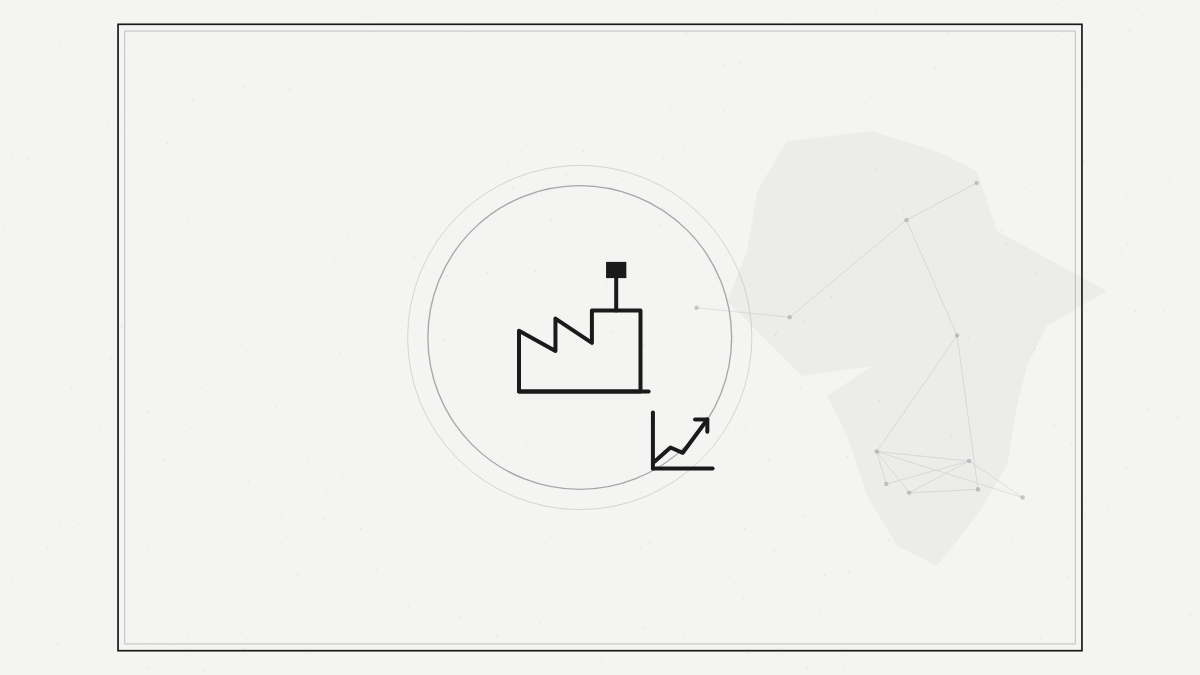
The company's planned 19-hectare, dry-process plant is designed to produce 800,000 tonnes of cement a year using fly-ash and nickel slag, cutting imports and creating about 515 jobs. It is a project that turns waste streams into building material and an import bill into domestic capacity – the rare diversification story that is physical, measurable and already under way.
The Dependency: Importing the Ground Floor
Cement is bulky, heavy and expensive to transport, which makes import dependence costly in exactly the input a developing economy uses most. Every tonne brought across a border carries freight and currency risk on top of its price. For a country pursuing industrialisation, importing the literal foundation of construction is a structural disadvantage, not a detail.
For a landlocked economy the penalty compounds. Cement reaching Botswana has typically travelled long distances by road from regional producers, with transport sometimes rivalling the cost of the product itself. Every public road, dam and housing project has therefore carried an embedded import premium. Producing at scale inside the country attacks that premium directly, and in a sector – construction – that the state leans on heavily to deliver infrastructure and stimulate the wider economy. Cheaper domestic cement quietly improves the economics of every project the country builds.
A nation that imports its cement subsidises someone else's industrial base.
The Method: Waste as Raw Material
The plant's use of fly-ash and nickel slag is the most interesting part of its design. Both are by-products – fly-ash from combustion, slag from metal processing – and both can substitute for material that would otherwise be quarried or clinkered at higher cost and higher emissions. Building cement from industrial residue ties the plant into Botswana's existing mining and energy economy rather than standing apart from it.
There is an industrial-ecology logic here that goes beyond a single plant. Botswana's power generation and its nickel and metals processing produce residues that are normally costs to manage and store. Routing those residues into cement turns disposal liabilities into feedstock, linking one industry's waste to another's input. That kind of clustering – where the by-product of one process becomes the raw material of the next – is exactly how mature industrial economies lower costs and reduce import exposure at the same time, and it is rarely seen this explicitly in a single Botswana project.
A dry-process plant is the more energy-efficient route to cement manufacture, using less water and heat than older wet methods. Pairing that process with waste feedstock is a deliberate cost and resource strategy: lower input costs, lower import exposure, and a use for materials that would otherwise be liabilities. The choice of technology signals an operator building for cost competitiveness, not just for capacity – a plant designed to undercut imports rather than merely replace them.
The cheapest raw material is the one another industry was paying to throw away.
The Scale: 800,000 Tonnes and 515 Jobs
Capacity of 800,000 tonnes a year is meaningful for a domestic market, enough to displace a substantial share of imports and to give local construction a supplier inside its own borders. The figure of about 515 jobs is the more visible return. In an economy under pressure to create employment outside mining and the public sector, a single plant of this size is a concrete contribution, in both senses.
Jobs in a cement plant also tend to anchor others around them – logistics, maintenance, supply – clustering activity at the site. For a diversification strategy that needs industrial employment rather than commodity rents, manufacturing capacity of this kind is precisely the category the budget conversation keeps pointing toward. The 515 direct roles are the headline; the indirect activity around a permanent industrial site is the part that compounds over time, and the skills it builds – process operation, maintenance, plant management – are transferable to the next manufacturer that follows.
Five hundred manufacturing jobs read differently in an economy trying to outgrow the mine.
The Comparison: Building Materials as an Industrial Beachhead
Across Africa, domestic cement has been one of the more reliable routes from import dependence to manufacturing capability. The product is heavy and protected by transport costs, demand is steady, and the technology is well understood – which is why building materials have repeatedly served as a first beachhead for industrialisation on the continent. Botswana coming late to that pattern is less a weakness than a chance to build with current, efficient technology rather than legacy plant. The fly-ash and dry-process design suggests exactly that.
The regional context sharpens the opportunity. Southern Africa has seen domestic cement industries reshape construction economics and, in some markets, turn net importers into exporters once local capacity outran local demand. With 800,000 tonnes of annual capacity, the question for Cheetah Cement is whether it is sized only to substitute for imports or eventually to push into neighbouring markets across SACU and the wider SADC region – the difference between import substitution and an export industry that earns foreign currency.
Heavy, local and constantly in demand – cement is where industrialisation often gets its first foothold.
The Wider Bet: Self-Reliance in Inputs
The project fits a larger logic of input substitution – building at home the materials a growing economy consumes, so that growth strengthens local industry rather than the trade deficit. Cement is a sensible place to start because demand is constant and the import penalty is high. If the plant performs as planned, it makes the case for applying the same thinking to other imported essentials, from steel to processed food, each of which carries the same landlocked transport burden.
Industrialisation begins with making the things you build everything else from.
Cheetah Cement's expansion is a small but legible test of whether Botswana can convert ambition into industrial fact. The plant takes domestic waste, applies an efficient process, displaces imports and creates jobs of the kind the country says it needs. None of that is guaranteed by an announcement, and execution in a market that still imports much of its construction input is the real hurdle. But as a model for what diversification looks like in practice – concrete capacity rather than policy language – it is the right shape of project for the moment Botswana is in.
Sources: Mmegi