
Economics – Macro & Markets · Editorial
By Moakanyi Magazine · June 2026
For half a century, Botswana's fiscal story has had one author: the diamond. Public spending, the Pula's stability and the country's reputation for prudent management all rested, in the end, on stones pulled from Jwaneng and Orapa. The February 2026 budget reads like the moment that arrangement stopped being enough.
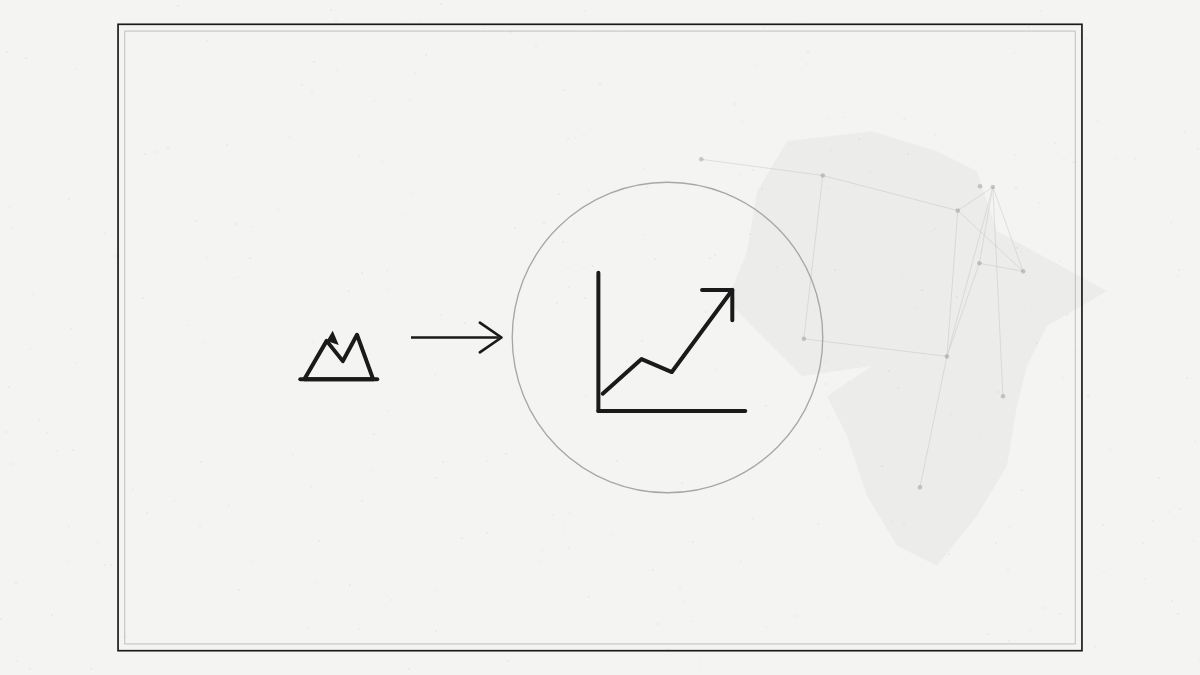
Finance Minister Ndaba Gaolathe's budget projects 3.1% growth for the year while warning that public debt could breach 40% of GDP as diamond revenues fall. His answer is not another state programme but a call for the private sector to drive diversification. Read carefully, the budget is two messages at once: a forecast of recovery and an admission that the engine which produced past recoveries is losing power.
The Number: 3.1% and a Ceiling Under Pressure
A projection of 3.1% growth is a rebound, not a boom, and it sits against the warning that matters more: debt approaching 40% of GDP. Botswana has historically guarded low debt as a point of discipline, so a figure pressing against that informal ceiling is a signal in itself. It says the cushion that diamond revenue once provided is thinning.
Context makes the figure starker. Botswana has long carried debt levels that most economies would envy, funded by decades of diamond surpluses saved rather than spent. A debt ratio nearing 40% is modest by global comparison but significant by Botswana's own standard, because it marks the erosion of the buffer that distinguished the country from its peers. The discipline was the brand. Pressure on the ceiling is pressure on the brand, and on the sovereign standing that has kept the Pula stable and borrowing cheap.
A debt ceiling under strain is a diversification deadline in disguise.
The Pivot: From State Engine to Private Driver
The most consequential line in the budget is the call on the private sector to lead. For decades the Botswana model was a capable state spending diamond revenue on infrastructure and services. Asking private firms to drive diversification is a change of engine, not just of speed – an acknowledgement that the public balance sheet can no longer be the country's main growth mechanism.
That shift puts weight on the institutions meant to crowd private capital in: CEDA for enterprise finance, BITC for investment promotion, the SEZ programme for industrial siting. None of these is new. What is new is the expectation that they carry growth rather than supplement it. The risk in that pivot is timing – private investment responds to confidence and returns, and a budget warning on debt and diamond revenue is not, on its face, a confidence document. The state is asking firms to lean in at exactly the moment its own position looks less assured.
When the state stops being the engine, the scaffolding around private firms has to hold.
The Constraint: Diversification Has Been Tried Before
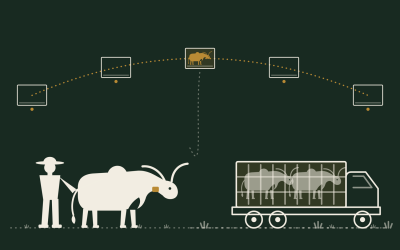
Botswana has pursued diversification for as long as it has had diamonds to diversify away from. Beef through the BMC, tourism in Ngamiland and Chobe, financial services on the BSE – each has grown without displacing the centrality of mining. The honesty of the 2026 budget is that it treats this as urgent rather than aspirational, framed by a falling revenue line rather than a development plan.
The difficulty is timing. Diversification is slow; revenue decline can be quick. A processing plant or an export industry takes years to build, while a soft diamond market shows up in the same fiscal year. The budget's 3.1% projection lives in that gap between a slow cure and a fast problem. The lesson from past plans is that diversification rarely fails for want of strategy – it fails when the urgency fades the moment diamond prices recover, and the structural work is shelved until the next downturn forces it back onto the agenda.
The diamond bought time. The question is whether enough of it was spent building the next economy.
The Comparison: A Resource Trap the Region Knows Well
Botswana is not alone in this bind. Across resource-dependent Africa, single-commodity economies have watched booms fund expansion and busts force retrenchment, with diversification promised in good times and abandoned in bad. What has set Botswana apart is competent management of the cycle – saving in surplus, avoiding the worst of the resource curse. The 2026 budget tests whether good management of a commodity can be converted into the harder skill of growing without one.
Few economies on the continent have made that transition cleanly, which is precisely why the attempt matters. Neighbours rich in copper, oil or platinum have repeatedly found that the discipline required to diversify is hardest to sustain exactly when commodity revenue makes it feel unnecessary. Botswana enters this period with stronger institutions than most peers and a credible regulatory record, but the same arithmetic applies: a narrow export base concentrates risk, and broadening it is a decade-long project measured against a revenue line that can fall in a single trading season.
Managing a commodity well is not the same as outgrowing it.
The Market Reality: A Soft Diamond Cycle
The budget's caution reflects a diamond market that has not been kind to producers. As natural-stone demand and pricing have come under pressure, the revenue that flows to Gaborone through its Debswana partnership moves with it. A budget that projects rebound while warning on debt is one written for a soft cycle it does not control.
For Botswana operators, the implication is concrete. A softer state means fewer of the public contracts and subsidies that have anchored much domestic business, and a heavier reliance on genuinely competitive, export-capable enterprise. Firms that have grown on government demand face a different environment from the one that built them. The budget is, in effect, a notice that the terms of doing business in Botswana are changing – that the path to growth now runs through markets the firm has to win rather than tenders it can expect.
You cannot budget your way out of a price you do not set.
The February 2026 budget is less a plan than a statement of position: growth is returning, but the old fiscal certainties are not. Whether Botswana holds its debt below the line it has long respected will depend on whether private firms answer the call this budget makes – and whether the institutions built to support them can move at the speed the diamond decline demands. The country has managed its resource wealth better than most. The harder test, the one this budget finally names out loud, is managing its decline.
Sources: Reuters