
Economics – Global & Regional · Editorial
By Moakanyi Magazine · Global Issue · June 2026
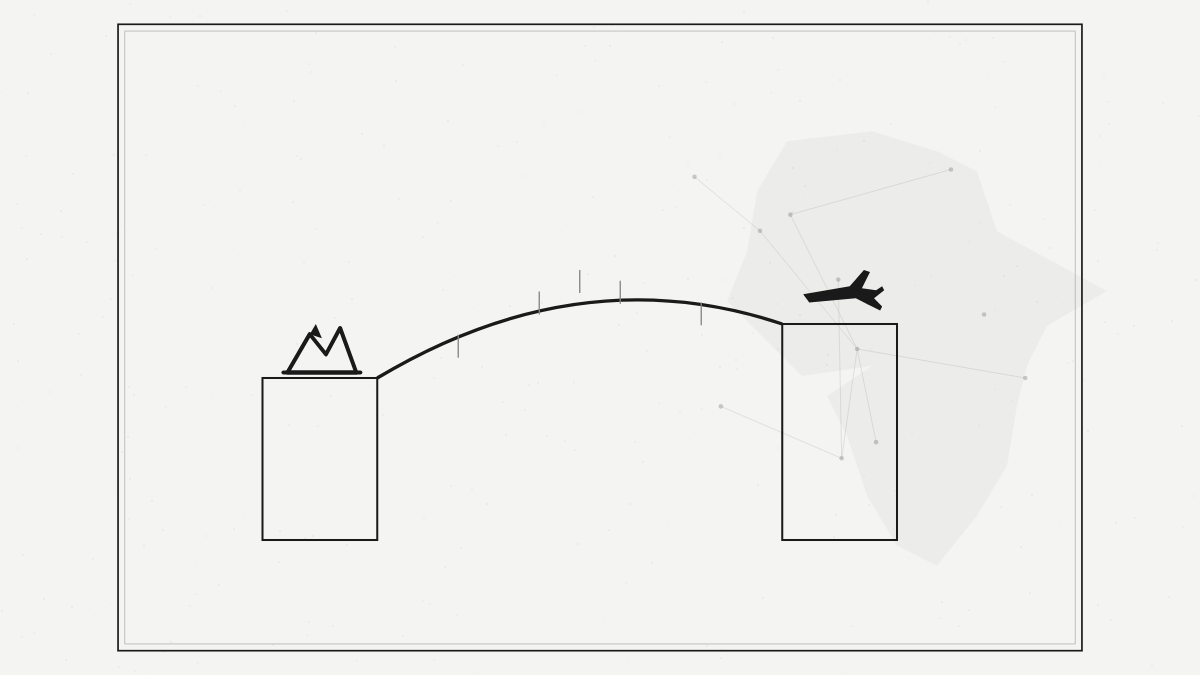
Two economies built on one commodity have decided to compare notes. Botswana and Oman have signed mineral-exploration and energy agreements, a pairing that looks unlikely on a map and obvious on a balance sheet. One country has lived for decades on diamonds, the other on oil, and both know exactly how it feels to watch a national budget rise and fall with a price set somewhere else.
The agreements span mineral exploration and energy, the two areas where Botswana most needs outside capital and Oman has both capacity and motive to deploy it. For Gaborone, the value is less about any single project than about who is now in the room, and what kind of relationship sits behind the signatures.
Two single-commodity economies, one shared problem
Oman is among the most instructive partners Botswana could pick. Its sovereign and state-linked vehicles have spent years pushing capital into mining, logistics and renewables abroad, precisely to reduce dependence on crude. Botswana is attempting the same pivot away from diamonds with far less financial firepower. A partnership lets the smaller economy borrow not just money but a playbook tested under similar pressure.
There is a diplomatic logic too. Both are stable, cautiously governed states accustomed to thinking in long horizons, which is the temperament resource projects demand. Neither is looking for a quick trade. That alignment of patience is itself an asset, because the work being contemplated, exploration and energy build-out, pays back over years rather than quarters.
Oman's own diversification record is the part worth studying closely. It has built ports and logistics hubs, courted foreign mining and renewable investment, and used state-linked capital deliberately to seed industries beyond oil. The results have been mixed, as such efforts always are, but the discipline of treating diversification as a sustained programme rather than a slogan is exactly what Botswana's own strategy has sometimes lacked. A partner who has made the attempt, including its missteps, is more useful than a textbook.
The best teacher for a one-commodity economy is another one a few decades further down the road.
Exploration capital: the input Botswana lacks most
Exploration is expensive, slow and statistically likely to fail, which is why domestic balance sheets rarely fund it at scale. Gulf capital that can absorb long horizons and dry holes is therefore a genuine match for Botswana's under-explored ground. The mineral-exploration leg of the deal matters most here: it puts foreign risk appetite behind the search for the country's next deposit, beyond the diamonds that have anchored the economy for so long.
The structure of that capital will decide how much Botswana keeps. Exploration deals can be generous or extractive depending on equity terms, beneficiation commitments and how discoveries are shared. The principle Gaborone has defended in diamonds, that the host country captures a fair portion of the value, applies just as forcefully to whatever comes out of this partnership. The terms, not the announcement, are where the national interest is won or lost.
Botswana has the ground and Oman has the patience, and exploration needs both.
Energy: the constraint behind every other ambition
The energy strand of the agreements speaks to a harder limit. Botswana imports a large share of its electricity, mostly from South Africa, and load constraints shadow every plan to process minerals at home rather than ship them raw. Bringing in a partner with capital and energy experience is how Gaborone hopes to relieve that bottleneck rather than simply live with it.
Beneficiation, the long-stated goal of adding value before export, is impossible without reliable power behind it. Smelting, refining and manufacturing are power-hungry by nature, and a constrained grid quietly caps how far up the value chain the country can climb. Energy cooperation is therefore not a side deal; it is the enabling condition for the industrial economy Botswana keeps describing in its diversification plans.
The two strands of the deal also reinforce one another. New minerals discovered through exploration are worth far more if there is power to process them at home, and new generation is more bankable if there is industrial demand to consume it. A partnership that addresses exploration and energy together, rather than as separate transactions, is better matched to how a resource economy actually develops, where the deposit and the power station are two halves of the same project rather than competing claims on attention.
Every mineral ambition in Botswana eventually runs into a power line.
Diplomacy off the diamond track
There is a quieter signal in the choice of Oman. Botswana's external economic relationships have long run through familiar channels: De Beers, the EU beef market, SACU and South Africa, the SADC neighbourhood. A Gulf partner widens that map and gives Gaborone a relationship that does not depend on the rough-diamond cycle. In a year when diamond demand has been soft, having counterparts outside the stone is its own form of resilience.
Spreading partnerships also spreads bargaining power. A country with only a handful of major economic relationships negotiates from a narrow base; one with several can play a longer game. The Oman accords are modest in that light but pointed in the right direction, adding a node to a network that has been thin for too long.
It is a measured step rather than a pivot, and that is the right way to read it. Botswana is not turning away from its established relationships with De Beers, the European market or its SADC neighbours; it is adding to them. The value of a Gulf relationship is partly that it is uncorrelated with those existing ties, so a downturn in the diamond trade or a shock in the regional economy need not drag down every channel the country relies on at the same moment.
Diversifying who you deal with is as strategic as diversifying what you sell.
From signing to substance
Agreements are easier to announce than to execute. The history of resource diplomacy is littered with memoranda that never reached a drill rig or a turbine, and Botswana has signed its share. The test will be whether these accords produce financed exploration programmes and energy projects with real timelines, or whether they join the file of cordial intentions. The structures of any joint vehicles and the committed capital remain to be detailed. [TK]
A memorandum is a promise; a drill rig is a project.
For Botswana the calculation is sober but sound. The country brings under-explored geology and a credible institutional record; Oman brings capital and the lived experience of an economy that diversified under pressure. If even part of this converts into financed work on the ground, Gaborone will have added a serious partner to a short list, and one whose interests run with rather than against the country's own diversification. The measured view is to welcome the relationship, hold it firmly to delivery, and judge it by what reaches the field rather than what reached the podium. On that test, the agreements are a beginning to build on, not a result to celebrate.
Sources: Reuters