
Economics – Macro & Markets · Editorial
By Moakanyi Magazine · June 2026
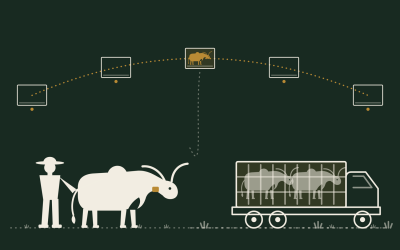
Botswana's foot-and-mouth disease problem is rarely a problem of veterinary science. It is a problem of perimeter. Fences fall, bush thickens, buffalo and cattle meet at the edges of the disease-control zones, and the country loses access to the markets that make its beef worth raising. The state's response in June 2026 was less a vaccine than a workforce: government deployed over 1,000 Ikageng workers to clear bush and rebuild fences against the disease.
That framing matters because it reorders the priorities. An outbreak invites talk of vaccination campaigns and movement bans, and those have their place. But the cordon fence is the standing line of defence, and it degrades quietly between crises. The deployment treats the perimeter as the asset it actually is.
The Scheme: Wages Now, Infrastructure Later
Ikageng is an emergency employment programme, and on its face this is a short-term jobs measure – cash into rural hands during a hard stretch. But the work being commissioned is not make-work. Cleared firebreaks and standing cordon fences are the physical substrate of Botswana's entire disease-zoning regime, the thing that lets the country argue to the EU and SADC partners that its export zones are clean. The labour buys a wage and a barrier at the same time.
That gives the deployment a longer horizon than most relief spending. A fence built this winter has to be inspected, patched and re-tensioned for years, which is where the long-term maintenance potential sits. An emergency cohort can become a standing maintenance cadre if the budgets follow the asset rather than the headline. The distinction is not cosmetic: relief budgets are spent and closed, while maintenance budgets recur, and only the second keeps a fence standing past the first season of rain and wildlife pressure.
A relief wage and a national asset are, this time, the same line item.
Why The Perimeter Pays: Beef And The Zone
Botswana's beef economy lives and dies on zoning. Foot-and-mouth status determines which districts can sell into the premium EU market through the Botswana Meat Commission, and a single incursion can shut a zone for a season. Bush that hides the fence line and broken wire that lets wildlife through are not aesthetic faults; they are the difference between a district that exports and one that does not. The wildlife-livestock interface in the north, where the cattle country meets the parks and the buffalo, is precisely where this margin is thinnest.
Seen that way, putting 1,000 people on the cordon is cheaper than it looks. The wage bill is visible and immediate. The avoided cost – a closed export zone, idle abattoir capacity, farmers with cattle they cannot move and cannot feed – is larger and mostly invisible until it lands. For the cattle farmer in an affected district, a working fence is not a public-works abstraction; it is whether this season's herd has a buyer at all.
The fence is not a cost centre; it is the licence to sell.
The Operator's Read: From Emergency To Standing Capability
For anyone building around Botswana's livestock economy – feedlots, transporters, the abattoir supply chain, the rural retailers who serve farming districts – the signal here is about reliability of access, not just this one outbreak. A perimeter maintained by a permanent cadre is a more predictable trading environment than one defended in spasms after each scare. Predictability is what lets a transporter commit a fleet or a feedlot commit capacity.
There is a second-order opportunity in the maintenance itself. Fence inspection, bush clearing and repair are recurring, dispersed, labour-intensive tasks – the kind that can be contracted to small local firms rather than run forever as an emergency state payroll. Whether that market develops depends on whether government chooses to institutionalise the work or quietly stand it down once the headlines fade.
Durable biosecurity is a contract pipeline, not a one-off scramble.
The test for Ikageng is whether it outlives its own emergency. If the deployment ends when the news cycle does, Botswana will rebuild the same fences again in two years at the same expense, having banked the wages and lost the asset. If the maintenance posture becomes permanent – the asset funded, the cadre retained, the inspections routine – then an emergency answer to one outbreak quietly becomes the country's standing defence of its most exportable industry. The difference is entirely a matter of follow-through.
Sources: allAfrica