
Economics – Global & Regional · Editorial
By Moakanyi Magazine · Global Issue · June 2026
The headlines say fragmentation; the cargo data say something steadier. Global trade volumes rose in April after falling in March, a rebound that held despite persistent geopolitical tension. For an economy whose prosperity depends almost entirely on selling into world markets, that resilience is more than a statistical curiosity. It is the difference between a trading system that still works and one that does not, and Botswana is among the economies with the most riding on the answer.
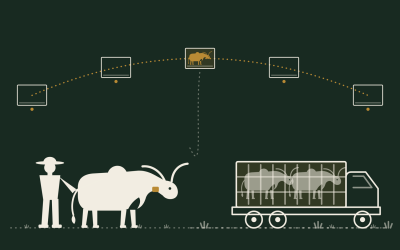
Botswana is close to a textbook open economy: a small domestic market, a heavy reliance on exports, and prosperity built on access to buyers abroad. It cannot grow by selling to itself. So when world trade proves more durable than the gloomier commentary feared, the channels Botswana relies on, for diamonds, beef and the tourism that brings the world to Maun and Kasane, stay open. The April figures are a reminder that, beneath the noise of trade tension, goods are still moving.
Resilience matters more for small economies
A large economy can lean on domestic demand when trade falters; a country of Botswana's size cannot. As world trade rose in April in a fresh sign of resilience, the practical meaning for Gaborone is that the diamond, beef and tourism flows on which the budget depends are operating within a functioning, not a fracturing, system. For an economy with no large internal market to fall back on, an open world is not a convenience but a precondition for growth.
The monthly pattern, a March dip followed by an April recovery, also matters. It suggests the system absorbs shocks and re-routes rather than seizing up, which is exactly the behaviour a price-taking exporter wants to see. A trading system that wobbles and recovers is one Botswana can plan around; a system that locks up is one that strands a landlocked exporter with goods it cannot move and buyers it cannot reach.
When the trading system bends rather than breaks, small exporters keep their access.
Open channels, but not guaranteed prices
Resilient volumes are not the same as strong prices, and the distinction is important for honest planning. Trade can keep flowing while the value of what Botswana sells stays under pressure, as it has in the diamond market through this period. The April rebound is encouraging on access and logistics; it says little on its own about whether Botswana's specific exports are commanding good prices in those open channels.
A working trade system is therefore a necessary condition for Botswana's recovery, not a sufficient one. The country still needs demand for its particular baskets to firm up, and that depends on consumer confidence and competition from substitutes rather than on the plumbing of global trade. Reading the April data as good news on access, but neutral news on price, keeps expectations honest.
Open doors are welcome, but they do not set the price on the other side.
Reading the signal from Gaborone
For policymakers and exporters, the resilience data support a steady course rather than a defensive crouch. Botswana's standing commitments, deepening SADC and AfCFTA integration, protecting access to the EU beef market and building tourism through Maun and Kasane, all assume the global trading system stays broadly open. April's figures suggest that assumption is holding for now, which argues for continuing to invest in market access rather than retreating from it.
The risk is complacency. A single resilient month does not retire the threat of fragmentation, and a landlocked economy has the most to lose if routes and rules tighten later. The sensible posture is to treat the rebound as confirmation that the strategy is sound, while continuing to widen the export base so that the next test of global trade finds Botswana less dependent on any single channel or market.
Resilience is a reason to keep building, not a reason to relax.
The April rebound is a modestly positive data point in an uncertain year, and Botswana should treat it as exactly that, no more and no less. The trading system that carries the country's diamonds, beef and visitors is proving more robust than the headlines imply. The task now is to use that open environment to keep widening the export base, so that the next strain on global trade, whenever it comes, finds a Botswana with more than one way to reach the world.
Sources: WSJ